
- Opinion Articles
- From Nixon to Trump: Pakistan’s Long Record of Back-Channel Diplomacy
From Nixon to Trump: Pakistan’s Long Record of Back-Channel Diplomacy

Waqas Abdullah
On April 9, 2026, Pakistan demonstrated strategic power through calculated diplomacy, leveraging its strong military reputation, nuclear deterrence, and critical geographic position. Pakistan positioned itself as a credible mediator in the Iran–US–Israel tensions. Its leadership maintained communication channels with all sides, promoted dialogue over escalation, and facilitated discussions on a temporary ceasefire, highlighting Pakistan’s strength as a responsible regional power.
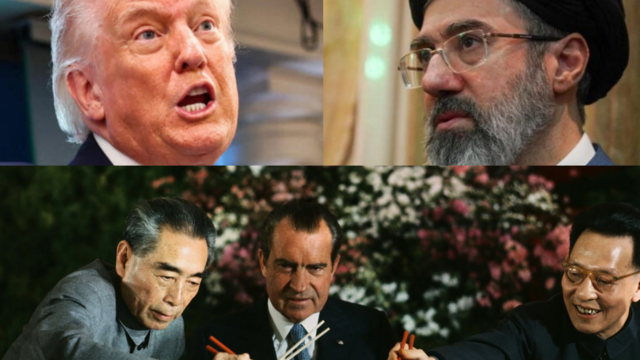
In international relations, diplomacy is often imagined as formal meetings between leaders, press conferences, and official negotiations conducted in public view. However, history shows that some of the most significant diplomatic breakthroughs have taken place quietly through secret communication channels known as back-channel diplomacy. These informal or confidential diplomatic contacts allow rival states to communicate without public pressure, media scrutiny, or political constraints. Few countries in modern history have played this role as consistently as Pakistan. From the Cold War era under President Richard Nixon to the contemporary geopolitical tensions involving Donald Trump, Pakistan has repeatedly acted as a trusted intermediary between rival powers. Its geographic position, strategic alliances, and diplomatic flexibility have allowed it to function as a bridge between states that often cannot communicate directly. This long tradition demonstrates that Pakistan’s role in global diplomacy is not accidental but deeply rooted in historical experience and geopolitical necessity.
Pakistan’s reputation as a back-channel state first gained global attention during the Cold War in the early 1970s, when relations between the United States and China were extremely tense and direct communication was politically difficult.
At that time, Washington sought to establish diplomatic relations with Beijing to counter Soviet influence, but formal negotiations were risky due to ideological rivalry and domestic political sensitivities. Pakistan, under the leadership of President Yahya Khan, became the trusted intermediary that facilitated secret communication between the two sides. Pakistani officials quietly transmitted messages between American and Chinese leaders, eventually arranging a secret visit by U.S. National Security Advisor Henry Kissinger to Beijing in 1971. This mission paved the way for President Nixon’s historic visit to China in 1972, a diplomatic breakthrough that reshaped global politics and reduced Cold War tensions. Without Pakistan’s mediation, this rapprochement might have taken much longer or might not have occurred at all. The episode established Pakistan’s reputation as a reliable diplomatic bridge capable of managing sensitive negotiations between powerful states.
Also read: Is the U.S.–Israel War on Iran Dividing the Muslim World?
Recently, Pakistan has once again demonstrated its relevance as a back-channel state in the context of tensions between the United States and Iran. Relations between these two countries have been marked by disputes over nuclear policy, regional security, and control of the strategically important Strait of Hormuz, through which a large portion of the world’s oil supply passes.
Escalation of tensions in this region poses serious risks not only for the Middle East but also for global energy markets and international trade.
In response to these challenges, Pakistan has positioned itself as a mediator capable of facilitating dialogue between Washington and Tehran. Diplomatic sources indicate that Pakistani officials have conveyed messages between the two governments and hosted discussions aimed at reducing tensions and inviting them for dialogue in Islamabad.

The reasons why Pakistan became a natural mediator in international politics are closely connected to its geography. Pakistan is located at the intersection of South Asia, Central Asia, and the Middle East, sharing borders with Iran and maintaining close relations with major global and regional powers. This geographic position allows Pakistan to interact with diverse political actors, including Western countries, Muslim-majority states, and Asian powers. In addition, Pakistan has historically pursued a pragmatic foreign policy that emphasises cooperation with multiple partners rather than strict ideological alignment. It has maintained security cooperation with the United States while simultaneously developing strong economic and strategic relations with China and other regional actors. This diplomatic flexibility has enabled Pakistan to build trust with competing states, making it a suitable channel for confidential communication during times of crisis.
Another important factor shaping Pakistan’s current diplomatic role is the direct impact of regional tensions on its own national interests. Pakistan depends heavily on energy imports that pass through the Strait of Hormuz, making stability in the Persian Gulf essential for its economic security.
Rising tensions between the United States and Iran can disrupt shipping routes, increase fuel prices, and create financial pressure on Pakistan’s economy. As a result, Pakistan’s mediation efforts are motivated not only by international responsibility but also by practical economic considerations. Acting as a peacemaker allows Pakistan to protect its national interests while enhancing its global reputation as a responsible regional power.
The continuity of Pakistan’s role from the Nixon era to the present reflects broader changes in the international system. During the Cold War, global politics was dominated by two superpowers—the United States and the Soviet Union. Today, the world is more complex, with multiple centres of power including China, regional organisations, and emerging economies. In this multipolar environment, middle powers like Pakistan have gained greater importance because they can facilitate communication between larger states that may not trust each other. This shift has increased the demand for diplomatic intermediaries capable of managing complex regional conflicts and preventing escalation.
Disclaimer: The views expressed in this article are solely those of the author and do not necessarily reflect the official stance of The Himalayan Research Institute Pakistan (THRIP)
_________________________________
Waqas Abdullah is a geopolitical analyst and anthropologist with expertise in Middle Eastern and Indo-Pacific politics. A Türkiye Bursları Scholar, he is pursuing a Master’s in International Relations at Selçuk University, Konya, Türkiye. Director of Foreign Affairs at DAG Media Network. His work focuses on climate refugees, human security, and regional cooperation.
Contact us

Write with Us
The Himalayan Research Institute is proud to introduce "Himalayan," a dynamic and insightful magazin...
- [email protected]
- +923426470466
- website