
- Opinion Articles
- Is the U.S.–Israel War on Iran Dividing the Muslim World?
Is the U.S.–Israel War on Iran Dividing the Muslim World?

Abdullah Hassan
The increased conflict between the United States, Israel and Iran has emerged as one of the most crucial geopolitical events in the recent past. Direct military conflict has taken the place of the shadow conflict that was characterized by indirect conflict. One critical question needs to be raised as the situation is getting worse, which is, how is this war affecting the unity of the Muslim world? Instead of presenting a reductionist viewpoint, the war brings to light a complicated truth governed by politics, the economy and national priorities.
From Regional Tensions to a Broader Conflict
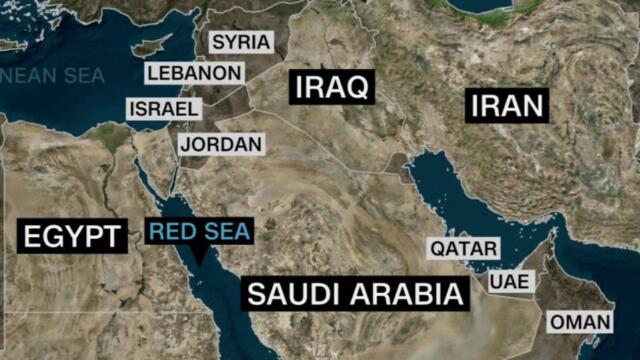
The relation between Iran and Israel has been full of tension over the decades, which has been motivated by proxy wars and strategic competition. But the recent events have involved the United States in a more active role with Israel, which has considerably widened the scope of the face-off. Reports suggest that there have been coordinated military operations against Iran, attacking Iranian strategic targets, and Iran has retaliated by launching missiles and drones on the region. The current state of affairs has escalated the issue from a regional to a world-scale geopolitical conflict.
On the one hand, the activities of the U.S. and Israeli sides can be explained by the need to solve security issues, especially in the areas of stability in the region and the power of Iran as a military threat. In the Iranian mindset, these are considered actions against sovereignty and, as such, are met with retaliation. These contrasting definitions indicate how difficult it is to attribute a single story to the conflict.
Diverse Responses Across the Muslim World
The most apparent consequence of the conflict is the differing reactions among Muslim-majority nations. States have not taken a unified wing because they have responded differently depending on their political and economic conditions. Countries in the Gulf region have placed emphasis on advancing domestic development and safeguarding economic goals, especially in the energy sector. Others have also taken a more cautious diplomatic stance, focusing on de-escalation and dialogue. Several of the states have stood on their feet, though they have not taken obvious positions on either side.
Such diversity of answers implies that the Muslim world does not function as a single political sphere. Rather, countries are all going through the crisis depending on their strategic priorities. The lack of unity of opinion can be further explained by looking at the political situation in the Muslim world. Changes in governance structures, regional interests, and international partners contribute to differences among respondents. For example, certain nations have intimate security alliances with the United States, and others have diplomatic or strategic relations with Iran. Other factors that affect decision-making include regional rivalry and sectarian dynamics.
This combination puts the national interest above the collective identities. The idea of unity has not lost its importance at the cultural or religious level, but it is more challenging to put it into practice in the complex geopolitical context.
The conflict is having an economic effect on the Muslim world, but not evenly on all.
The Middle East's geographic position in the global energy supply chain means that turmoil in the region has direct implications for oil prices, trade dynamics, and economic policies. Recent events have added to (i) oil market fluctuations in the world, (ii) risks to major sea routes like the Strait of Hormuz are on the rise, and (iii) unpredictability in foreign business and investing (Reuters, 2026)
Increasing prices can result in a temporary monetary boost for some oil sellers. But to other people- particularly those who rely on imports, this situation puts a strain on inflation and even a strain on the economy. Countries directly or indirectly affected by conflict also have issues related to infrastructure, security and development. Such diverse economic results also justify the different reactions in the Muslim world to the conflict.
On the social level, the opposition has produced a set of responses. Historical understanding, media, and local political circumstances affect the opinions of people in most Muslim-majority nations. Public demonstrations and expressions of solidarity have been seen in some areas, whilst in other areas, more circumspect or polarised discussion has ensued. The conflicting sides are interpreted differently by people, based on their reasons, whether it is religious, political or humanitarian, which results in various opinions. To most people, the case raises intricate questions rather than conclusive answers. It is not that easy to balance sympathy, national identity, and global awareness, and this is also mirrored in the public discourse.

The United States' intervention adds even more complexity to the conflict. As a powerful global nation with significant influence in the Middle East, it determines regional affairs and the world's reaction. Muslim nations are hence left with hard decisions. Align with international giants, maintain strategic alliances, remain nonpartisan, focus on domestic security, promote diplomacy, but stay out of it.
There are different risks and consequences of every option. This measure of strategic balancing will make it difficult to strike a balance and deliver a decisive response, despite shared interests in the region's stability.
Is Division Increasing or Becoming More Visible?
A major difference to note is that the conflict may be actively dividing or merely shedding light on divisions. The long-established historic, political and economic differences between Muslim nations have been a decades-old issue. These differences seem to be becoming more proximate with the current war. It brings to the limelight the multiplicity of interests and opinions in the Muslim world by compelling countries to adopt active or neutral policies.
In this perspective, therefore, the war need not be the actual source of division, but rather an agenda that exposes the realities underlying it.
Conclusion
The American-Israel war with Iran is a skirmish of its kind in international and regional politics. Its influence in the Muslim world is complex, as it affects political choices, economic status, and social attitudes. Although the principle of unity still lingers, the reactions of the Muslim states speak of an even greater multifaceted reality of national interests and plans. Instead of highlighting an obvious contrast over his divides, the situation depicts the difficulty of holding knowledge together in a multi-ethnic and multi-centred world. Unity is no longer presumed in a fast-changing geopolitical context; it has to be developed through cooperation, dialogue and joint responsibility.
Disclaimer: The views expressed in this article are solely those of the author and do not necessarily reflect the official stance of The Himalayan Research Institute Pakistan (THRIP)
_________________________________
Abdullah Hassan is a student of International Relations at the University of Central Punjab, Lahore, Pakistan.
Contact us

Write with Us
The Himalayan Research Institute is proud to introduce "Himalayan," a dynamic and insightful magazin...
- [email protected]
- +923426470466
- website