
- Opinion Articles
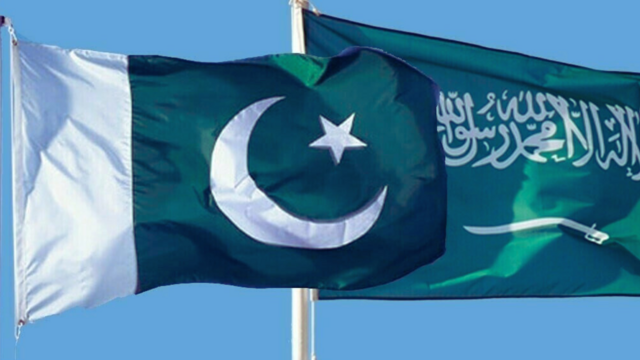
- Iran-Israel Conflict Spillover: How will the Pak-Saudi Defense Pack Manifest?
Iran-Israel Conflict Spillover: How will the Pak-Saudi Defense Pack Manifest?

Muhammad Zain ul Haq
“The Pak-Saudi defense deal primarily serves as a diplomatic and economic lever for Pakistan in the Middle East while limiting direct military engagement and potential conflict spillover with Iran.”
The Middle East conflict has escalated sharply following the preemptive strike on Iran by U.S.-backed Israel, which has reportedly killed the Iranian Supreme Leader and top officials, including the leader of the IRGC. Iran has retaliated with airstrikes on 8 Middle Eastern states: Israel, the UAE, Bahrain, Qatar, Kuwait, Iraq, Jordan, and Saudi Arabia. This spillover effect has intensified, engulfing almost the entire Middle East, with Iran reportedly closing the Strait of Hormuz, as stated by the EU Naval mission after receiving a radio message from the IRGC. With the conflict potentially intensifying, will it spill over to Pakistan due to the Pak-Saudi defense deal?
The main clause of the Pak-Saudi defense deal was “An attack on one state is an attack on both states.” With Iran firing missiles at Saudi Arabia, the possibility of this treaty manifesting can be a possibility. Though the nature of this treaty remains strategic, its ambitions and context represent a different reality. The Pak-Saudi defense treaty (17 Sep 2025) was a result of Israel's attack on Qatar, which infuriated the Gulf states, as the U.S., a guarantor of Gulf security, did not condemn the attack in any way. This event forced Saudi Arabia to expand its security guarantor, with the prime option being a fellow Muslim nation, with nuclear capabilities, strong military capabilities, and proven combat experience after the recent confirmation with India in May. Pakistan's ambitions were also more economic than military. It secured $3 Billion rollover over its loans and a potential defense market in the Middle East. Pakistan, till this day, remains committed to the policy of limited military engagement, limited to India and Afghanistan. Pakistan expanding its security concerns beyond its region will be against its interests and its economic capability, considering Pakistan's limited economic growth and counter terrorism issues.
You can also read: From Nixon to Trump: Pakistan’s Long Record of Back-Channel Diplomacy
Saudi Arabia sought a security guarantor that could fill the strategic vacuum created by the absence of the U.S. Hence, this deal has a high probability to manifest if there is a threat from Israel that America is unable to deter due to strong alignment and greater interest with Israel. Any interest that goes against the U.S. and Israel's strategic objectives in the Gulf can be addressed by Washington. Given that Iran constitutes a key security challenge for both the United States and Israel, the Gulf, particularly Saudi Arabia's security, is strongly aligned with the U.S.; Pakistan has not much part to play in this conflict except for neutral diplomatic support and maintaining a policy of restraint.
Will this deal have potential for defense export?
Pakistan, being a military-centric economy, can greatly benefit from this situation with defense export deals with Middle Eastern states. Pakistan’s combat-proven defense industry can make its market in the Middle East, which constantly faces security concerns. The Pak-Saudi deal can provide political and diplomatic ground that facilitates the execution of these export deals. Pakistan’s growing export footprint includes Azerbaijan and Libya, the latter valued at between US$ 4 billion and US$ 4.6 billion for JF-17s, Super Mushshak trainers, and other systems. According to international trade statistics, Pakistan’s exports of arms and ammunition to Saudi Arabia in 2024 were valued at about US $734 million, which shows a potential market for Pakistan's defense industry.
A major repercussion of these exports might be the worsening of Pakistan-Iran relations, which could cause instability along Pakistan's Balochistan border. Balochistan, already an unstable region and home to BLA, might become even more unstable. Pakistan, already facing economic hardships in addition to insurgency issues with Afghanistan and increasing military conflict at Afghan border, will not be able to tolerate an unstable Balochistan border. Limited military hardware and air defense training might be the extent of Pakistan's defense export in the Middle East. Iran, with its history of supporting proxies and being a state that excels in proxy wars, can be a threat to Pakistan's internal dynamics in this regard, especially considering a significant amount of the Shia Muslim population in Pakistan. Hence, Pakistan's defense export to the Middle East carries strategic trade-offs, limiting the scale and scope of Pakistan’s engagement. Defense export to Iran is not possible due to US sanctions and it will require careful calibration of both foreign and domestic security policy to establish defense export in the Middle East.
Also read: Is the U.S.–Israel War on Iran Dividing the Muslim World?
The Saudi-Pakistani mutual defense agreement with Riyadh is more diplomatic than military in nature. Pakistan may contribute to Saudi air defense planning and training, given its credibility in its recent skirmish with India. Saudi economic support to Pakistan is more beneficial to Islamabad, which continues to face serious economic challenges but has maintained its security posture. But neither state is likely to completely commit itself to the defense of the other, particularly in the scenario of Iran.
Disclaimer: The views expressed in this article are solely those of the author and do not necessarily reflect the official stance of The Himalayan Research Institute Pakistan (THRIP)
_________________________________
Muhammad Zain Ul Haq is a research director at Rethinking Economics, Islamabad, Pakistan. He can be reached at [email protected]
Contact us

Write with Us
The Himalayan Research Institute is proud to introduce "Himalayan," a dynamic and insightful magazin...
- [email protected]
- +923426470466
- website