
- Opinion Articles
- The Islamabad Memorandum: Pakistan’s Diplomatic Triumph
The Islamabad Memorandum: Pakistan’s Diplomatic Triumph
Waqas Abdullah
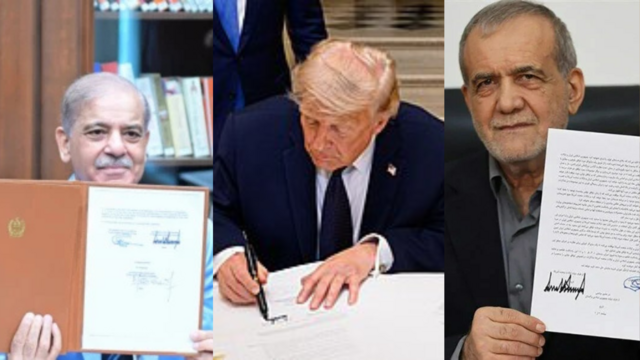
Pakistan has long occupied a unique position in international politics. Situated at the crossroads of South Asia, Central Asia, the Middle East and the Gulf, the country has often been viewed primarily through the lens of security challenges. Yet recent developments surrounding the reported U.S.-Iran understanding, popularly referred to as the "Islamabad Memorandum," have highlighted another side of Pakistan, its ability to serve as a credible diplomatic bridge between rivals.
For decades, Washington and Tehran have remained locked in one of the world's most difficult strategic rivalries. Mutual distrust, sanctions, nuclear disputes and regional conflicts have repeatedly undermined efforts at dialogue. Numerous mediation attempts by different countries achieved only limited progress. Against this backdrop, Islamabad's emergence as an active facilitator represents a remarkable diplomatic achievement.
Pakistan played a significant role in facilitating communication between the United States and Iran during a period of heightened regional tensions. Islamabad reportedly helped relay proposals, hosted negotiations and encouraged both parties to maintain dialogue when military escalation threatened wider regional instability.
Whether history ultimately remembers this framework as a breakthrough or merely the first step toward a broader settlement, Pakistan has already demonstrated an important diplomatic principle: dialogue remains more effective than confrontation.
Balanced Foreign Policy and Regional Peacebuilding
One of Pakistan's greatest strengths during these negotiations was its balanced foreign policy. Unlike many regional actors that are closely aligned with one side or the other, Pakistan maintains working relationships with both Tehran and Washington. It shares a long border with Iran while simultaneously preserving security and economic cooperation with the United States. This unique diplomatic position allowed Islamabad to build trust with both capitals.
Pakistan also enjoys strong relations with Gulf countries, particularly Saudi Arabia and the United Arab Emirates, while maintaining close strategic cooperation with China and constructive engagement with Türkiye and other Muslim-majority states. This broad diplomatic network enhanced Islamabad's credibility as a facilitator rather than as a partisan actor.
The reported negotiations also reflected Pakistan's longstanding commitment to peaceful conflict resolution. For years, Pakistani diplomacy has consistently argued that regional disputes cannot be resolved through military means alone. Instead, sustainable peace requires dialogue, confidence-building measures and respect for international diplomacy.
If the reported Islamabad Memorandum succeeds in reducing tensions, the benefits will extend well beyond the United States and Iran. Reduced tensions in the Gulf contribute to safer maritime trade, more stable energy markets and lower risks for countries whose economies depend on uninterrupted oil shipments through the Strait of Hormuz. Early market reactions reflected optimism that de-escalation could improve regional stability.
For Pakistan itself, successful diplomacy strengthens its international reputation. Countries often gain influence not only through military or economic power but also through their ability to solve problems that others cannot. By helping keep communication channels open during a dangerous crisis, Islamabad projected itself as a responsible stakeholder committed to regional peace.
Also read: From Nixon to Trump: Pakistan’s Long Record of Back-Channel Diplomacy
A New Chapter for Pakistan's Global Diplomatic Role
The diplomatic effort also demonstrates the growing importance of middle powers in international politics. Today's complex global environment increasingly requires countries capable of communicating with multiple rivals simultaneously. Pakistan's reported mediation illustrates how states outside the traditional great powers can contribute meaningfully to international peace initiatives.
Importantly, Pakistan's role should neither be exaggerated nor underestimated. Mediation does not mean imposing solutions. Successful mediators create opportunities for dialogue, reduce misunderstandings and provide neutral diplomatic space. Ultimately, agreements succeed only when the principal parties themselves decide that negotiation is preferable to confrontation. Pakistan's contribution lies in facilitating that choice rather than dictating its outcome.
The reported framework also highlights another important lesson: diplomacy remains indispensable even during periods of severe military confrontation. History repeatedly shows that most conflicts ultimately end at the negotiating table. By encouraging dialogue at a critical moment, Islamabad reinforced the enduring value of diplomacy over escalation.
Nevertheless, challenges remain. Implementation of any understanding between Washington and Tehran will require sustained political commitment, verification mechanisms and continued negotiations on unresolved issues, including sanctions, regional security and nuclear concerns. Even supporters of the agreement recognize that this is only the beginning of a much longer diplomatic process.
Also read: Iran-Israel Conflict Spillover: How will the Pak-Saudi Defense Pack Manifest?
For Pakistan, however, the broader diplomatic message is already clear. The country demonstrated that constructive engagement, strategic balance and patient diplomacy can generate international confidence. In an era marked by polarization and conflict, this represents an important contribution to regional and global stability.
The Islamabad Memorandum, if successfully implemented, may become remembered not only as an agreement between two long-standing adversaries but also as evidence that diplomacy still works when political courage meets patient negotiation. Pakistan's reported facilitation has offered a reminder that middle powers can shape international affairs through dialogue rather than coercion.
In a world increasingly defined by geopolitical competition, Islamabad has shown that influence is not measured solely by economic size or military strength. It is also measured by the ability to build trust, create diplomatic space and encourage adversaries to choose negotiation over conflict. If these efforts ultimately lead to lasting peace, Pakistan's role will stand as one of the most significant diplomatic achievements in its recent foreign policy history
Disclaimer: The views expressed in this article are solely those of the author and do not necessarily reflect the official stance of The Himalayan Research Institute Pakistan (THRIP)
_________________________________
Waqas Abdullah is a geopolitical analyst and anthropologist with expertise in Middle Eastern and Indo-Pacific politics. A Türkiye Bursları Scholar, he is pursuing a Master’s in International Relations at Selçuk University, Konya, Türkiye. Director of Foreign Affairs at DAG Media Network. His work focuses on climate refugees, human security, and regional cooperation.
Contact us

Write with Us
The Himalayan Research Institute is proud to introduce "Himalayan," a dynamic and insightful magazin...
- [email protected]
- +923426470466
- website