
- Opinion Articles
- The Enemy Within the Argument: Rethinking Balochistan Beyond the “Foreign Hand”
The Enemy Within the Argument: Rethinking Balochistan Beyond the “Foreign Hand”
Fatima Bashir
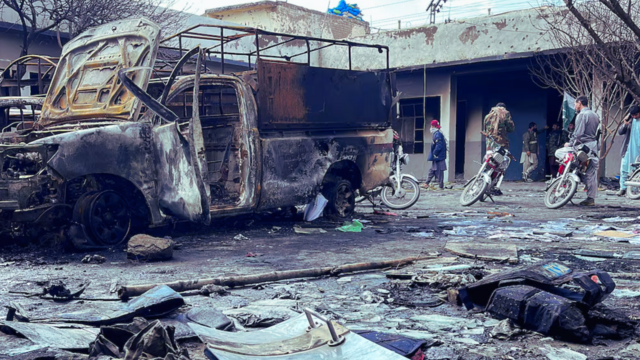
When militants attacked security forces convoys in Balochistan this July, killing dozens of security personnel in a matter of days, the government in Islamabad had a familiar response. Prime Minister Shehbaz Sharif accused India of funding and supporting the militants. Islamabad has made similar allegations against New Delhi after the 145 fighters were killed in a February attack on a security convoy in Quetta. Even more similar rhetoric was used last year after a train derailment and a roadside bombing in Balochistan, which claimed the lives of dozens of people. It is not that this theory is unreasonable; it is rather that this theory has been repeated, and in Islamabad’s case, relied upon, for nearly eight decades, with little apparent effect.
While it is entirely possible that Pakistan’s neighbours may take advantage of Balochistan’s unrest to further their geopolitical interests, the fact that Islamabad has been willing to accept this theory as an explanation for decades of violence in Balochistan has allowed Pakistan to avoid more difficult conversations with itself.
Pakistan’s own statistics provide a sobering reminder of the relationship between Islamabad’s economic policies and Balochistan’s restiveness. Balochistan is Pakistan’s poorest province, with a poverty rate of 47 per cent compared to the national average of 24 per cent. The United Nations Development Programme (UNDP) has the multidimensional poverty rate in Balochistan at 71 per cent, with the literacy rate at 42 per cent, the lowest in Pakistan according to the 2023 census. Despite being the source of Pakistan’s natural gas since the 1950s, Balochistan is home to some of the country’s most underdeveloped areas. Researchers at Human Rights Watch have noted that many gas-producing districts in the province do not have access to natural gas. Balochistan’s wealth in natural resources has not translated into development, fuelling frustrations amongst the Baloch. Disparities in economic development have long been a source of tension and resentment between Pakistan’s provinces and Islamabad, but in the case of Balochistan, it has manifested in feelings of outright betrayal.
This theory goes beyond just anecdote and builds on the political violence research of Ted Gurr, who posited that the perception of inequality between what one should be entitled to and what one possesses accounted for much of political violence. This was later updated by an economist, Frances Stewart, who spoke about “horizontal inequalities”, which were rooted in power relations and were a source of conflict for people sharing a territory. Baluchistan is a textbook case of this scenario, as it holds gas resources that the state exploits for the benefit of the rest of Pakistan. Thus, the theory explains why attempts by Islamabad to blame external forces for unrest in Baluchistan have failed. The root cause of the conflict has been identified incorrectly – it is not an interplay of external and internal factors, but rather the exploitation of one of the underprivileged groups by the state, which has made the Baluchistan people resort to violence.
The lack of development in Balochistan is only part of the story. The issue of enforced disappearances has overshadowed the lives of tens of thousands of Baloch. The cases of enforced disappearance from Balochistan have been documented by Pakistan’s own Commission of Inquiry on Enforced Disappearances, which has registered thousands of cases since 2011. Human Rights Council Balochistan (HRCP) has documented hundreds of cases of enforced disappearances and killings in Balochistan in 2023 and 2024 alone. The Human Rights Commission of Pakistan (HRCP) has noted in its reports that families of the disappeared have lost faith in the newly established mechanism for dealing with enforced disappearances. When Pakistan’s own institutions find themselves unable to address the concerns of the Baloch, blaming Islamabad’s actions on foreign interference does little to address the concerns of those who suffer the most from Pakistan’s domestic policies.
Also read: Political Mayhem in AJK: The Proscribed JAAC Movement and the Conundrum of Refugee Reserved Seats
Pakistan’s domestic politics provide a useful reference for understanding Islamabad’s relationship with Balochistan. The 1971 Bangladesh war was not only an Indian conspiracy but also the result of years of political and economic neglect of East Pakistan. While India’s role in the Bangladesh war is well known, Pakistan’s domestic policies were the root cause of the Bangladesh war. Similar sentiments can be seen in Sri Lanka’s experience with its Tamil minority, which saw decades of political and economic neglect before the Sri Lankan government was willing to engage in a civil war with Tamil insurgents. The Khalistan movement in Indian Punjab in the 1980s emerged out of political disempowerment and economic hardship of the Sikhs, but the government of New Delhi decided not to examine the causes of these failures and instead blamed it on a Pakistani conspiracy. A more direct comparison would be made in Indian administered Kashmir, where decades of political disenfranchisement and heavy security-led governance have led to unrest, which Delhi consistently blames on Pakistan. It's the same with China: Foreign Islamist groups have been blamed for unrest in the autonomous region of Xinjiang, covering up for Chinese repression of the Uighur population that has been underway for some time. The same can be said for Northern Ireland, where decades of political and economic neglect of the Catholic minority resulted in a bloody conflict between Northern Ireland’s unionists and republicans. In all of these cases, foreign interference did not cause the conflicts but rather took advantage of the situation created by the home state’s negligence.
Also read: Manufactured Escalation – India’s Pre-Election Playbook and the Illusion of War
This is not to dismiss the concerns of Baloch nationalists or to defend the Pakistani government’s use of enforced disappearances. The attacks on security personnel and ordinary civilians in Balochistan are reprehensible, and the Pakistani security forces should investigate them. However, a military response to such attacks has proven to be a short-term solution at best. Pakistan’s security forces can kill scores of militants, but they cannot create the conditions necessary to prevent future attacks. If Islamabad wants to stop Pakistan’s enemies from exploiting Balochistan’s instability, it should focus on addressing the root causes of the province’s restiveness. By providing more equitable economic development and greater political representation for Balochistan’s citizens, Pakistan can reduce the appeal of separatist movements and decrease the role of outside actors in Balochistan’s affairs.
Disclaimer: The views expressed in this article are solely those of the author and do not necessarily reflect the official stance of The Himalayan Research Institute Pakistan (THRIP)
_________________________________
Fatima Bashir is a student of BS International Relations at the University of Central Punjab, Lahore, Pakistan. Her work examines climate change and geopolitics.
Contact us

Write with Us
The Himalayan Research Institute is proud to introduce "Himalayan," a dynamic and insightful magazin...
- [email protected]
- +923426470466
- website