
- Opinion Articles
- Iran’s Royalist Revival: Could the Monarchy Return?
Iran’s Royalist Revival: Could the Monarchy Return?
Haseeb Sulehri
Could Iran really restore its monarchy? As protests surged across the country last year, a question that until recently seemed almost unthinkable has resurfaced. For years, opposition to the Islamic Republic has centered on replacing religious rule with what many believed would be a secular republic. However, amid rage, economic hardship, and repression by state officials, symbols of the former monarchy began appearing on the streets. With help from the former crown prince, it has been speculatively suggested that the monarchy may return again. But is all this really possible? Well, of course, at one time or another, numerous monarchies existed in the world, either directly or within an empire. However, over the last hundred years, the number of monarchies has steadily decreased because new republics emerged through revolution. Today, no more than forty states have a king, queen, emperor, prince, or grand duke. Nonetheless, old kings occasionally return to their thrones. This is the case in Spain, where the restoration of the monarchy after Franco's death contributed to the stabilization of the country's democratization process. Another example of a comeback monarch is Bulgaria. In particular, in 2001, the former king Simeon Saxe-Coburg-Gotha returned to his homeland from exile and became the Prime Minister of the republic.
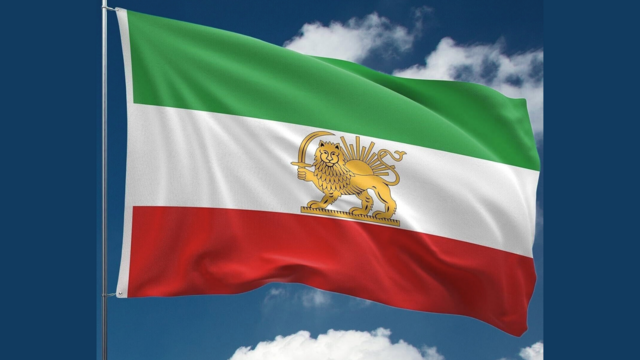
Iran's former crown prince, Reza Pahlavi, is the loudest advocate of overthrowing the regime, and his calls for political change from abroad can be seen as a unifying voice. In addition, the former Iranian flag appeared in the streets at times, and people supported the former Shah through hashtags on social networks. To some, the monarchy symbolizes an era of peace and pride. But to others, it stands for a time of dictatorship and discrimination. Iran has a particularly extensive and profound history, beginning with the formation of the Achaemenid Empire by Cyrus the Great in the sixth century BCE; Persia, then the name of Iran, was a vast empire stretching from Central Asia to the Mediterranean. Later, other dynasties reinforced Iran’s standing as a major power. However, by the nineteenth century, under the Qajar dynasty, Iran had become politically weak and was increasingly vulnerable to the influence of rising European imperial powers such as Britain and Russia. In this situation of weakness and subordination, Iranian nationalism developed. Reza Khan, a military officer who had risen through the ranks, overthrew the Qajar monarch, the shah, and crowned himself the new shah, Reza Shah Pahlavi. Immediately after taking over, he began reforming the system. He consolidated his own power base and reduced the power of the tribes and the clergy.
At the same time, he built up the country's educational infrastructure. All this came at a high price. Being a dictator, he oppressed any form of opposition and limited political freedom. Nevertheless, less than two decades after coming into power, he met his downfall in 1941. Having shown too much sympathy for Nazi Germany, and under pressure from Britain and the Soviet Union, he was forced to abdicate during the Second World War. The throne then passed to his son, Mohammad Reza Shah Pahlavi. Under the new shah, the monarchy became both more powerful and more controversial. At first, Mohammad Reza Shah ruled within a constrained political environment. Over time, however, he consolidated his authority. The pace increased even further after the overthrow of Prime Minister Mohammad Mossadegh in 1953 for attempting to nationalize the country's oil industry, for which he served as prime minister. Within the context of the Cold War, the Shah positioned himself as an advocate of modernisation and a bulwark against communism. But while he promoted land reform, expanded education, and supported women’s rights, he also suppressed all opposition. Within the terrorizing regime of the secret police, SAVAK, all opposition groups were liquidated, elections were fixed, and opponents of the regime were intimidated, arrested, tortured, and usually executed. While oil income soared during the 1970s, the regime grew ever more wasteful. As the Shah and the ruling class grew richer and richer, enjoying luxurious lives and throwing lavish parties, their wealth contrasted sharply with the poverty of much of the country.
By the end of the decade, many Iranians across the political and social spectrum had come to view the monarchy as an arrogant, out-of-touch symbol of corruption and profound inequality. All this eventually reached a crisis point in 1978, when a wave of protests spread across the country. Despite efforts to suppress the demonstrations, the shah, who was now seriously ill, was left isolated both at home and abroad. As the Iranian Revolution gained momentum, the shah fled the country in January 1979. Within weeks, Ayatollah Ruhollah Khomeini replaced him, and the Islamic Republic of Iran was established. At the same time, after the exile of the shah, he ended up spending the final days of his life in different countries that allowed him asylum until he died in exile in Egypt in 1980. Some family members, such as his son, Crown Prince Reza Pahlavi, have settled in America and France.
Also read: What if the Khamenei Regime Falls: Geopolitical Implications for the Region
In the years since the revolution, Iran has formed a political system with religion at its core. The supreme leader holds the highest governing power and stands above elected institutions. In addition, although the country holds elections, the rules in place ensure that only certain people get elected to office. Meanwhile, the country has also faced growing social and economic problems as religious rules were strictly applied. Women in particular faced harsh repression, as compulsory use of the headscarf saw the morality police become hated symbols of the regime. In addition, economic mismanagement, corruption, and international sanctions have steadily undermined the country’s living standards. As a consequence, this development has led to mounting opposition to the government over the last several decades.
Younger generations of people have never experienced the revolution. They view the government as being repressive, which results in outbreaks of demonstrations. Nevertheless, although the regime has been able to survive up to now, each new round was accompanied by even tougher repression. Despite US warnings that violence against protesters would be met with a harsh response, the crackdown led to hundreds of deaths. Nevertheless, despite the violence, there was a sense that the regime may collapse. In this context, some have started calling for the monarchy to return. Aside from flags of the old regime appearing at protests, there has also been online chatter about the return of the shah. Although these calls have been limited so far, they have been enough to attract global attention. However, while the exiled former crown prince has consciously stayed away from appeals for him to come back as a monarch, Reza Pahlavi has capitalized on this feeling. In his public statements, he has painted himself as a transitional leader who can help guide Iran to a referendum on its future political system through democracy. Is there then a possibility that the monarchy may ever return to Iran? Strictly speaking, the possibility is very slim.
While it might seem appealing to some, particularly because the crown prince could become a single, immediate figure to unify the country during a time of transition, there are many more reasons to believe it will not happen. To begin with, there is no clear domestic backing for a return to monarchy, let alone an organized movement with widespread support to push for it. Similarly, no external power appears willing to enforce such a result. And while most of the country is too young to recall Iran under the last shah, many Iranians still remember the repression and inequality of that era. Few will be eager to see it return. Instead, if Iran removes its theocratic rulers, the new administration is far more likely to be a secular republic driven by pragmatic compromise than the romantic restoration of a king. However, from a broader perspective, the emergence of royalist symbols is important. It may not be a direct appeal for the return of monarchy, but it clearly emphasizes the degree of dissatisfaction with the present system. In this way, the calls serve not as a credible alternative to the existing regime, but rather as another means to challenge it, and to challenge it in a way that many will know is bound to stir up particular anger.
Disclaimer: The views expressed in this article are solely those of the author and do not necessarily reflect the official stance of The Himalayan Research Institute Pakistan (THRIP)
_________________________________
Muhammad Haseeb Sulehria is a researcher from Quaid-i-Azam University (QAU), Islamabad, currently pursuing a Bachelor's degree in Defense and Strategic Studies. His research interests include defense, strategic affairs, international relations, and national security.
Contact us

Write with Us
The Himalayan Research Institute is proud to introduce "Himalayan," a dynamic and insightful magazin...
- [email protected]
- +923426470466
- website