
- Opinion Articles
- What if the Khamenei Regime Falls: Geopolitical Implications for the Region
What if the Khamenei Regime Falls: Geopolitical Implications for the Region

Muhammad Awais
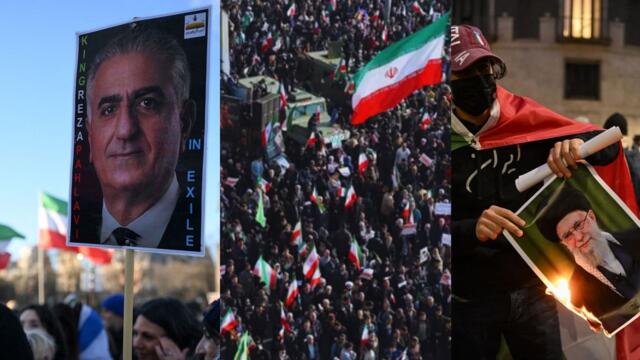
The US-led Western world’s old playbook is repeating itself once again, and this time Iran is in the crosshairs. What is happening on the streets of Tehran is no longer a mere outcry against inflation. It is gradually evolving into a broader attempt to undermine, discredit, and eventually overthrow the Khamenei-led government and then replace it with a Western-friendly face in Tehran.
The current Iranian crisis is deeply rooted in economic distrust. Iran operates within an anarchic international system where decades of sanctions, mismanagement, corruption, and expensive regional misadventures have eroded the buying capacity of the common Iranians and hollowed out the middle class. Basic food commodities are no longer affordable to many households, and the domestic currency has lost significant value against the dollar.
At the same time, Iran has had more than 40 years of theocracy, driven by an ideology that views the country as a sole divine force whose purpose is to resist the tyrants (the United States of America, Israel, and Europe). The state of religious officials has infiltrated all spheres of the subject. Caught in an international sanction, Iran cannot act in the public interest economically, which is why it is natural that the public is disgusted after half a century. The flame exists within the Iranian population, but the Western media is setting it ablaze, like fueling the fire with oil.
The demonstrations have spread to dozens of cities, including Tehran, Mashhad, Tabriz, Shiraz, and Karaj. There are many protesters in the streets of Tehran. Reports suggest that 500 individuals have been killed and over 10,000 have been taken into custody within two weeks of anti-government demonstrations. Several police stations have been burned down, and people have burned down the state TV building in Isfahan.
The flaws and failures of the Iranian regime are indeed real, but the question is not insignificant as well: Does the West really care about the Iranian people? Absolutely Not! Iran is burning, yet the flames of this fire will not remain confined to Tehran.
The fall of Ayatollah Ali Khamenei not merely marks the end of one of the most enduring revolutionary governments in the region but also fundamentally remakes power in the Middle East, South Asia, and Eurasia. Any change in Tehran, in particular, that would result in a western-oriented government would be felt in energy markets because of its effects on Middle Eastern politics, which has been characterised by security alliances and proxy networks over the last 10 years. Neither will it be a clean game of democracy v dictatorship; this will be a dirty, high-stakes rearrangement with dire geopolitical consequences to Pakistan, China, Russia, and other players in the region.
The immediate outcomes would be anarchic if the Khamenei regime collapsed. Iran is not a political empty place to be occupied by a liberal option; all by itself, it is a multifaceted game board where clerical networks, the IRGS, ethnic and sectarian movements and Western-oriented elites compete to assume power. Power vacuum may lead to infighting, fragmentation, or a new military strongman order. Long-established proxy networks in Iraq, Syria, Lebanon, and Yemen, which are linked to Tehran, could also fragment, become rogue or be co-opted by other regional actors, forming new non-state threats.
The most significant geopolitical question is not whether the regime falls, but what replaces it. A Western-aligned government in Tehran, particularly one closely tied to Washington, would radically alter regional relations. Pakistan would find itself in an entirely different company in the West. It is possible that Islamabad may have a Tehran that is more sensitive to US security interests and more willing to conduct coordination with India. The field will be free for India to carry out propaganda on Pakistan.
China, meanwhile, would lose a critical partner in its efforts to counterbalance US influence in the Gulf and secure diversified energy supplies. Strategic and economic initiatives with a long-term orientation, such as those that are associated with Belt and Road connectivity projects and China’s mediation efforts between Iran and Saudi Arabia, could be sidelined in favour of Western investors and security frameworks. Russia is already on the edge of facing the West, and it would lose a significant partner. A more hospitable Tehran to the West would put a stranglehold on the Moscow south flank.
Even Saudi Arabia and the Gulf monarchies, who might initially welcome the weakening of a revolutionary rival, could discover that a pro-Western Iran is not a compliant neighbour, but a competitor for Western arms, investment and interests. A new Tehran could challenge the Riyadh position by presenting itself as Washington’s indispensable ally in the Gulf. Meanwhile, in case the post-regime Iran is insecure or disunited, the Gulf states would be exposed to the spillover risks irrespective of ideology: smuggling, militia groups, sectarian mobilisation, and the like will all be aggravated.
In short, the collapse of the Khamenei regime and the emergence of a Western-favoured political order in Iran would undermine the strategic space of Pakistan, China, and Russia and, in more complex ways, even Saudi Arabia. It would reinforce the US-imposed security structure across the broader region, creating little space for multipolarity or autonomous regional balancing.
The toppling of the Khamenei regime would not usher in a peaceful, liberal dawn for the Middle East. Instead, it will plunge the region into a dangerous phase of transition, and new struggles have arisen. The establishment of a Western-favoured government in Tehran would be hailed as a victory of democracy over authoritarianism in Washington and the European capitals, but to many states in the region it would be seen as the implementation of the strategic vice. China, Russia, Saudi Arabia and even Pakistan would confront a transformed strategic landscape that reduces their margin of manoeuvre and poses new security challenges across land routes, maritime corridors, and vital energy and trade routes linking Eurasia.
The real question is not simply whether the Iranian regime will survive, but whether any transformation in Iran will reflect the aspirations of its people or serve the interests of external powers playing a far larger global chess game.
Disclaimer: The views expressed in this article are solely those of the author and do not necessarily reflect the official stance of The Himalayan Research Institute Pakistan - (THRIP)
_________________________________
Muhammad Awais is a master's student of Political Ideas in the Digital Age at CY Cergy Paris University. He writes regularly on international affairs, geopolitical developments and global flashpoints.
Contact us

Write with Us
The Himalayan Research Institute is proud to introduce "Himalayan," a dynamic and insightful magazin...
- [email protected]
- +923426470466
- website