
- Opinion Articles
- Deterrence & Cost of War: Strategic Significance of the MILGEM-Class Corvettes in Maritime Power
Deterrence & Cost of War: Strategic Significance of the MILGEM-Class Corvettes in Maritime Power

Muhammad Zain ul Haq
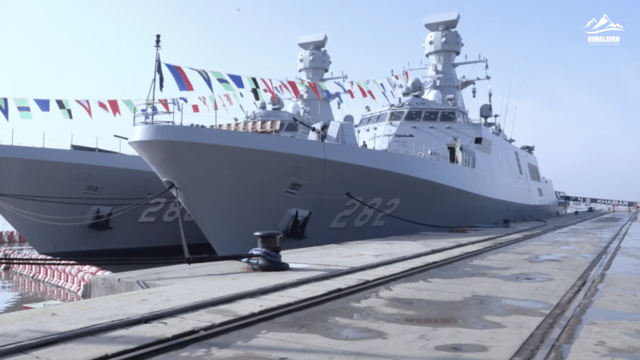
PN MILGEM-class corvette, aka Babur class, for PNS BABUR, being the first of its type, produced in collaboration with Türkiye under a contract signed between Pakistan’s Ministry of Defense Production and Turkey’s state-owned defense firm ASFAT in 2018. The official commissioning of PNS KHAIBAR, sister ship of Babur, in Istanbul, where I personally had the opportunity to visit the ship and engage with officials, at the Istanbul Naval Shipyard during Dec 2025. The MILGEM is the most technologically advanced, equipped with the latest command-and-control systems, advanced sensors, modern weapons, and capable of operating in a networked environment and undertaking all kinds of operations in all domains of warfare, whether in the littorals or at sea. These military modernization initiatives have more than just traditional security and strategic dimensions, especially in the case of Pakistan, where its key traditional security concerns lie with India, but Pakistan has to move beyond traditional concerns to address its economic security and diplomatic standing. The comparison between traditional and non-traditional security imperatives will represent Pakistan's growing concerns in the Arabian Sea and its strategic policy direction in maritime affairs.
In terms of traditional security, Pakistan's only key concern in the Arabian Sea is its arch-rival, India.
The modernization of the Indian Navy can compel Pakistan to modernize its navy to deter a potential aggressor with much greater maritime capabilities. Looking at the Indian fleet and maritime capabilities, Pakistan has a long way to go before it can compare itself with India’s maritime power, but the key question remains: Is it even necessary to compete with India? Pakistan, even in its non-nuclear, i.e., conventional military strategy, adopts a policy of minimum deterrence, meaning achieving capabilities sufficient to credibly deter the aggressor and increase the cost of war for the enemy, so that the costs outweigh the potential gains. Hence, Pakistan has no intention of competing with India or engaging in an arms race with a much greater economic power. But having tighter, much greater control over the Arabian Sea can help Pakistan achieve its strategic objective of increasing the cost of war. “Our doctrine now places greater emphasis on adaptability and information dominance,” as stated by the Chief of Naval Staff of Pakistan Navy during his interview with Defense Turkiye. He further emphasized the importance of acquiring dominance in cyber and electronic warfare and unmanned & autonomous systems in the Pakistan Navy, as this capability was well demonstrated by Pakistan during the recent conflict with India on May 25. This naval modernization becomes essential to secure the Sea Lines of Communications (SLOCs) and trade routes, from which the majority of Indian trade is carried. During the India-Pakistan conflict in May 2025, India was unable to escalate the conflict at sea as the damage to India's commerce & economy would have been much greater. Hence, Pakistan's key ambitions do not lie in direct confrontation in the Arabian Sea, but to increase the cost of war.
In terms of the cost of war for Pakistan, the MILGEM-class corvettes benefit Pakistan by reducing its costs manifold, as they are much smaller warships packed with advanced technology, which increases efficiency and reduces the cost of maintaining much larger warships. The same principle can be observed in the Russia-Ukraine conflict, where Ukraine can fight a much greater power, especially using low-cost weapons that create immense costs on the Russian defense system.
These ships will enable Pakistan to establish dynamic “Kill Webs” rather than to rely on traditional Linear Kill Chains. Traditional linear kill chains describe a sequential, step-by-step process through which a naval platform detects, targets, and destroys an enemy asset. Its is Slow, Fragile, and centralized. On the other hand, kill web enables decentralized decision-making and simultaneous engagements across multiple domains. Major benefit comes from Cross-domain integration, i.e., Sea, Air, Space, and Cyber. Pakistan's ambitions of launching its own satellite and shifting its focus to intelligence and cyber further enhance its significance, as mentioned by the PN Chief of Naval Staff in his interview with Defense Turkiye.
Also Read: From Nixon to Trump: Pakistan’s Long Record of Back-Channel Diplomacy
Moving further beyond traditional security, Pakistan sees this opportunity as a strategic realignment and defense cooperation with countries like Turkiye and China. This military modernization also enhances Pakistan's strategic collaboration, with the primary benefit being technology transfer and geo-economic security. This represents Pakistan’s ambitions to realign with non-Western powers and move away from the traditional US security bloc. The non-Western alliance's leverage comes with technology transfer, as two of the MILGEM-class ships are being built in Pakistan, giving further impetus to the local shipbuilding industry. The shipbuilding industry, the mother of all industries, is crucial to Pakistan's Blue Economy, especially given the CPEC project and the development of the Gwadar port. In terms of technology and skill transfer, Pakistan gained access to ship design knowledge & combat-system integration, which enables infrastructure and industrial autonomy. Pakistan is increasingly pursuing resource and economic sovereignty and reducing overdependence on a single bloc. In this regard Turkiye not only expands Pakistan’s reach in defense collaboration but also to a new defense market where Pakistan can potentially export its defense equipment, especially after Pakistan's significant gains in the active operations against India during a short and intense war with India in May 2025 and Pakistan-Saudi Defense Agreement, which portrays Pakistan's potential in the security & defense industry and strategic collaboration. MILGEM corvette enhances Pakistan's industrial autonomy and can convert military credibility into economic and diplomatic capital.
Pakistan's maritime strategy is evolving beyond an exclusive reliance on China, but, due to the MILGEM corvette's strategic benefit to the CPEC program, Pakistan has mediated its ties between middle and great powers.
Beyond enhancing strategic autonomy, the MILGEM-class corvette provides diplomatic manoeuvrability in a multipolar Indo-Pacific by enhancing security to the CPEC project, the developing Gwadar port, and the maritime route near the Baluchistan region. A major issue of nontraditional security threats, mainly being narcotics smuggling, illicit trade, and insurgency through Baluchistan province, requires a swift response, which a MILGEM-class corvette efficiently provides due to its decentralized nature and low operational cost. Overall, the MILGEM-class has opened new paths for Pakistan in terms of the defense market, strategic collaboration, global diplomacy, and balance of power in the Indian Ocean Region. The MILGEM program symbolizes Pakistan’s transition from traditional strategic doctrine to technology-driven deterrence, geo-economic security, and strategic balancing between major powers.
Disclaimer: The views expressed in this article are solely those of the author and do not necessarily reflect the official stance of The Himalayan Research Institute Pakistan (THRIP)
_________________________________
Muhammad Zain Ul Haq is a research director at Rethinking Economics, Islamabad, Pakistan. He can be reached at [email protected]
Contact us

Write with Us
The Himalayan Research Institute is proud to introduce "Himalayan," a dynamic and insightful magazin...
- [email protected]
- +923426470466
- website