
- Opinion Articles
- AUKUS and the Transformation of Australia’s Maritime Deterrence Strategy in the Indo-Pacific
AUKUS and the Transformation of Australia’s Maritime Deterrence Strategy in the Indo-Pacific

Waqas Abdullah
AUKUS resembles a submarine agreement. It isn’t. It is altering the Australian thinking on deterrence at sea. The agreement is propelling Australia out of a support role in US-led operations and into a more forward and independent position in the Indo-Pacific. That is important since the Chinese navy is expanding rapidly and is supported by infrastructure that keeps competitors at bay.
Australia has long been dependent on the United States. The model was concise. Australia gave niche capabilities and facilitated a broader alliance based in Washington. Its submarines and surface fleet were competent, though not constructed to conduct a large-scale war on its own. Deterrence was not independent and isolated. That begins to change with AUKUS. It is led by its main attraction- nuclear-powered submarines.
Also read: Target Europe: Strategic Autonomy in an Era of Uncertainty
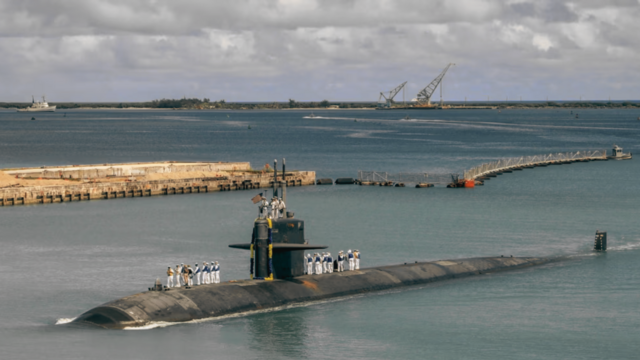
These boats can go farther, remain underwater longer, and operate more quietly than conventional boats. That provides Australia with a wider reach. It also provides it with the capability to threaten adversaries far beyond its shores. However, it is not just the submarines that are changing.
AUKUS is developing a close network among Australia, the United States and the United Kingdom. It includes sub-sea warfare, cyber capabilities, artificial intelligence and super senses.
The outcome is a more networked deterrence, with real-time sharing of information and capabilities. This is relevant as China is altering the balance of the seas. Its fleet has grown rapidly. It is also spending on missiles, surveillance equipment, and anti-submarine equipment to keep other forces at bay. The objective is simple: to make it more difficult and dangerous for others to work in disputable regions like the South China Sea. This shift cannot be overlooked in Australia. Open sea lanes are vital to its trade and security. One of the responses is a more active and stronger posture.
Having advanced submarines and collaborating more closely with allies will complicate any enemy's plans for Australia. It makes aggression more expensive and deters the deterrence. Meanwhile, AUKUS cites a shift in Australian self-perception. It is an indication of a shift towards greater responsibility for security within the region. The partnership with the United States is still the key. Australia is no longer the only supporting player. It is becoming more proactive in security. Such a change is risky. A more proactive stance might escalate the situation in areas such as the South China Sea or the Taiwan Strait. The use of advanced submarines in areas of conflict increases the likelihood of miscalculation. Deterrence can stabilise and sharpen suspicion.
Another issue is timing. Submarines that utilise nuclear energy will not be coming soon. So far, Australia risks a gap in its current fleet due to ageing. It will be difficult to control that gap. It will involve long-term investment and tight collaboration with partners. Provided it is not properly handled, deterrence may even be undermined before it can become effective. Dependence questions are also in place. AUKUS offers more potential, but it will bring Australia even closer to US and UK technology. Integration is enhanced by common systems and intelligence. That comes with power yet restricts total autonomy.
Also read: Deterrence & Cost of War: Strategic Significance of the MILGEM-Class Corvettes in Maritime Power
Nevertheless, the trend is evident. AUKUS is leading Australia towards a more aggressive maritime policy. It is expanding its presence and enhancing its deterrent capabilities. It is also integrating Australia into a well-linked system of high military power. Indo-Pacific is getting more disputed. Power is shifting. Risks are rising. Stillness is not an option in that setting. AUKUS is the Australian response to that challenge. Delivery will determine whether it works. Skills should be on time. Integration should yield actual benefit. And dangers should be dealt with. AUKUS is not a silver bullet. Nonetheless, it is a turning point in how Australia prepares to defend its interests at sea.
Disclaimer: The views expressed in this article are solely those of the author and do not necessarily reflect the official stance of The Himalayan Research Institute Pakistan (THRIP)
_________________________________
Waqas Abdullah is a geopolitical analyst and anthropologist with expertise in Middle Eastern and Indo-Pacific politics. A Türkiye Bursları Scholar, he is pursuing a Master’s in International Relations at Selçuk University, Konya, Türkiye. Director of Foreign Affairs at DAG Media Network. His work focuses on climate refugees, human security, and regional cooperation.
Contact us

Write with Us
The Himalayan Research Institute is proud to introduce "Himalayan," a dynamic and insightful magazin...
- [email protected]
- +923426470466
- website