
- Opinion Articles
- Pakistan-Qatar LNG Deal
Pakistan-Qatar LNG Deal

Taleesan Abdullah
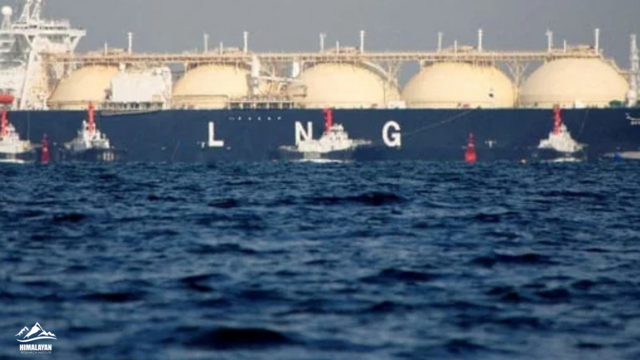
Pakistan, a nation on the brink of an energy crisis, has long regarded Qatar as the “backbone” of its energy sector. This is especially true in LNG (Liquefied Natural Gas). When the first LNG cargo arrived in March 2015 at Pakistan’s Engro Elengy Terminal, it was considered a turning point for Pakistan’s energy sector problems. However, the same contract with Qatar has now become a burden for Pakistan.
According to statistics, 90% of Pakistan’s LNG imports come from Qatar, and as of 2026, the war in Iran and the closure of the Strait of Hormuz have exposed Pakistan’s catastrophic reliance on a single supplier. Relying on Qatar to this extent was never a strategic move for Pakistan; it was a “gamble” from the start, with supplies arriving through a single maritime chokepoint affected by the war, and Pakistan is paying a high price for that decision. The reported strikes at Qatari LNG facilities have knocked out 17% of export capacity and sent shockwaves through the global economy, including Pakistan.
According to prior research, Pakistan’s gas reserves were expected to deplete by 2026, and a demand-supply mismatch was seen, with the demand reaching 8 billion cubic feet per day while the supply fell below 1 BCFD (billion cubic feet per day). For Pakistan, other projects like the Iran-Pakistan pipeline and the (TAPI) project were subject to geopolitical complexity and were never expected to be delivered in the short term. For Pakistan, importing from Qatar, the world’s largest LNG exporter with 13.1% of global natural gas reserves, seemed like a pragmatic option. In 2016, Pakistan signed a government-to-government deal, followed by a second deal in 2021, adding 3 million tonnes per annum and bringing Qatari supply to 6.75 million tonnes annually. LNG accounts for 48% of Pakistan's total energy supply, and the power sector alone consumes 70% of it. For Pakistan, Qatar became an essential backbone over time.
On March 2, 2026, various strikes at QatarEnergy’s Ras Laffan Industrial City (the largest LNG liquefaction facility in the world) halted production, and Qatar immediately declared force majeure on long-term contracts. The Strait of Hormuz accounts for 20% global LNG transits, and it was closed by the Iranian Military. According to the analysis, Pakistan sourced all of its 6.6 million tonnes of LNG imports for 2025 from Qatar, leaving it among the most affected economies in South Asia. Academic research on Pakistan’s future with LNG also identified the risk of a halt to entire thermal electricity generation in the event of a war, which could lead to the blockade of global seaports. Entering 2026, Pakistan was caught in a contradictory position: it had to consume LNG during periods of surplus due to long-term take-or-pay contracts with Qatar, yet was exposed when supply suddenly evaporated due to geopolitical tensions. Under the “contractual trap” with Qatar, Pakistan is obligated to pay $5.6 billion for LNG under long-term contracts, whether consumed or not.
The geopolitical lesson embedded in the Qatargas project is instructive. According to Stanford University Research on Qatargas, a situation similar to Pakistan's was seen in Japan in the 1980s, where Japan was concerned about committing to Qatar for LNG due to security-of-supply concerns in the Persian Gulf, arising from doubts about the Iran-Iraq tanker war. Pakistan did not learn its lesson from Japan, which has developed strategic LNG reserves, floating storage capacity and has diversified its supplier base across countries like Australia, Malaysia and the United States and in comparison, Pakistan put all its eggs in one basket offered by Qatar, routed through one gulf strait, the control of which is under Iran and has seen supply consistency problems in the past as well.
Also read: Beyond Oil and Allies: China’s Quiet Revolution in the Middle East
Pakistan needs to revamp its energy strategy and must treat the ongoing crisis as a structural indictment of its energy policy. Moving forward, some shifts for Pakistan that are essential include:
- Pakistan must pursue mid-term energy contracts with countries like Australia and the United States, so that a regional conflict in the Gulf does not turn the lights off in Islamabad. Pakistan must ensure that no single supplier accounts for more than 40-50% of the national import mix.
- Pakistan needs to develop on-the-ground LNG storage, or it will continue to operate under a just-in-time delivery system with no response to shipping delays and refinery outages.
- For Pakistan, the only way to decouple the national grid from Middle Eastern geopolitics is to boost local gas exploration and refining, which were closed primarily to accommodate imported LNG. Developing these should be Pakistan's new focus.
In conclusion, Pakistan needs to urgently accelerate domestic gas production, invest in LNG storage infrastructure, and pursue diversified supply agreements across Qatar. Pakistan should also consider its untapped renewable energy potential, estimated at 59 GW from hydro alone, as well as vast reserves of wind and solar that remain largely unexplored. The Qatar LNG deal initially solved Pakistan’s LNG crisis in the short term, but in the long term, it has created a problem far larger than the one we initially faced. The reckoning due to ongoing geopolitical tensions is here, and Pakistan must change its fate through active policy; if it does not act, it will eventually be exposed to and bear the consequences of the current and any future crises in the Persian Gulf.
Disclaimer: The views expressed in this article are solely those of the author and do not necessarily reflect the official stance of The Himalayan Research Institute Pakistan (THRIP)
_________________________________
Taleesan Abdullah is a researcher at Rethinking Economics Islamabad, an economics-based think tank. He provides insights into global economic issues and their implications for Pakistan, accompanied by relevant policy recommendations. He is currently a third-year BS Economics student at Bahria University, Islamabad.
Contact us

Write with Us
The Himalayan Research Institute is proud to introduce "Himalayan," a dynamic and insightful magazin...
- [email protected]
- +923426470466
- website