
- Opinion Articles
- Preachers in the Age of Rising Seas: What Saudi Arabia Global Religious Training Misses
Preachers in the Age of Rising Seas: What Saudi Arabia Global Religious Training Misses

Waqas Abdullah
Climate diplomacy is usually imagined as a story of summits, treaties, and carbon markets. Yet some of the most consequential communicators in the Anthropocene are not diplomats at all. They are imams, who speak to millions of people every week in places where no minister, scientist, or NGO has the same standing. That is why a recent announcement deserves attention beyond religious circles. According to Arab News (2026), Saudi Arabia’s Ministry of Islamic Affairs held 58 religious courses in 29 countries in the third quarter of 2026, benefiting 11,055 participants. The ministry’s reported annual figures show the scale of the programme: in 2025, it ran 144 specialized courses, including 96 in-person courses in 58 countries and 48 online courses reaching 93 countries. This is a serious, sustained investment in training religious leaders. The question is what that training is for and what it leaves out.
What the Courses Teach: The curriculum, as publicly described, is theological and political in a narrow sense. A course in Malé, the Maldives, covered sound creed and Islam’s values of mercy and benevolence while emphasizing the rejection of extremism and radicalism ([insert Saudi Press Agency or ministry source]). A course in Kenya centred on an explanation of Imam Ahmad ibn Hanbal’s book Usul Al-Sunnah. Training in Indonesia covered the methodology of Ahl al-Sunnah wal-Jama’ah and the importance of adhering to the Qur’an and Sunnah. The stated goals are moderation, balance, and countering extremism. These are legitimate priorities, and many governments share them. But the publicly available reports cited here do not mention drought, heat, water scarcity, coastal erosion, or biodiversity loss. In the Anthropocene, that omission is notable.
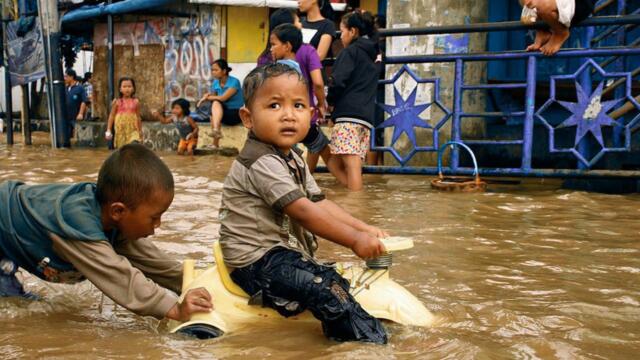
Where the Pressure Is Already Felt: Many of the countries named in these programmes are on the front line of environmental change. The Maldives, whose capital hosted one of the courses, is among the world’s lowest-lying countries and faces serious risks from sea-level rise (Intergovernmental Panel on Climate Change [IPCC], 2022). Indonesia is contending with land subsidence and coastal flooding in parts of Java, while countries in West Africa face risks associated with desertification, rainfall variability, and climate change (IPCC, 2022).
For communities in these places, climate disruption is not an abstract policy debate. It can determine whether wells run dry, whether harvests fail, and whether families must migrate. The imam who stands before them on Friday may be an important source of meaning and guidance when that happens.
An Untapped Theological Resource: There is nothing foreign to Islamic thought in environmental responsibility. Concepts widely discussed by Muslim scholars, such as humanity’s role as steward (khalifah), the principle of balance (mizan), and the prohibition of waste (israf), provide a basis for environmental ethics. In 2015, a group of Islamic scholars and leaders issued the Islamic Declaration on Global Climate Change, calling on Muslims and their leaders to respond to climate change (Islamic Declaration on Global Climate Change, 2015). Muslim-majority societies also have historical traditions of protected land and resource management, including the hima system; the specific use and meaning of haram should be supported with an appropriate scholarly source.
So, the argument is not that religious training should be turned into environmental training. It is that the tradition being taught already contains resources for environmental ethics, and a programme reaching more than eleven thousand participants in a single quarter has a rare opportunity to use them.
An Opportunity for Saudi Diplomacy: There is also a diplomatic logic. Riyadh has presented its Saudi Green Initiative as a national and regional priority (Saudi Green Initiative, n.d.). Its religious outreach, by contrast, appears to operate largely in a separate lane. Connecting the two could be a coherent expression of soft power: a country that trains imams in dozens of nations could help them speak credibly about stewardship, resilience, and adaptation in the language their communities already trust.
It could also help religious institutions remain relevant to the communities they serve. Religious authority that does not address a crisis affecting people’s livelihoods risks appearing disconnected from their daily concerns. Religious authority that engages with it may gain relevance.
Caveats Worth Stating: Three cautions are in order. First, this argument relies on public descriptions of these courses, not their full syllabi, so some may already include environmental material that has not been reported. Second, preachers should not be turned into government messengers. Credibility depends on local ownership, and local scholars and institutions, such as the Maldives’ national imam refresher programme ([insert verified source]), may be better placed to shape environmental content than outside trainers.
Third, a country that is both a major hydrocarbon producer and a promoter of environmental stewardship will face scrutiny over whether its message matches its energy policy. That tension should be acknowledged openly, not avoided.
Recommendation: The ministry could pilot a short, optional environmental-ethics module in its existing courses, developed with local scholars, drawing on classical Islamic sources, and co-designed with climate-vulnerable host communities, beginning with places such as the Maldives. Such a pilot could build on infrastructure already in place and test whether large international religious training networks can contribute to the response to climate change rather than remain bystanders. The imams in those conference rooms will be addressing floods, droughts, and displacement in the years ahead, whether they have been trained for it. The question is whether they will be prepared.
Disclaimer: The views expressed in this article are solely those of the author and do not necessarily reflect the official stance of The Himalayan Research Institute Pakistan (THRIP)
______________________________
Waqas Abdullah is a geopolitical analyst area of expertise in Middle Eastern and Indo-Pacific politics. A Türkiye Bursları Scholar. He is pursuing a master's degree in international relations at Selçuk University Konya, Türkiye. His work focuses on climate refugees, human security, and regional cooperation