
- Blogs
- Pakistan's Strategic Gain: Inside Trump's Board of Peace - Balancing Advocacy for Palestine with Global Opportunities
Pakistan's Strategic Gain: Inside Trump's Board of Peace - Balancing Advocacy for Palestine with Global Opportunities

Waqas Abdullah
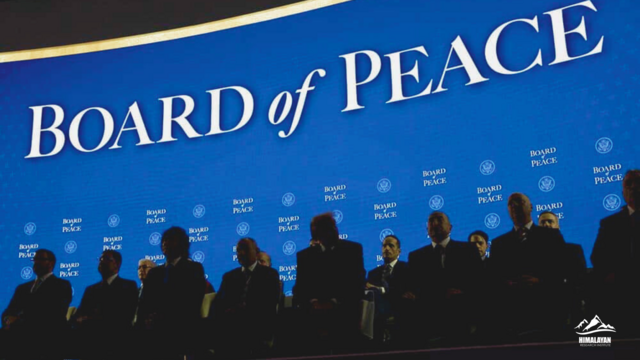
In a historic diplomatic development announced on January 21, 2026, eight prominent Muslim-majority nations, Saudi Arabia, Turkey, Egypt, Jordan, Indonesia, Pakistan, Qatar, and the United Arab Emirates, have formally accepted invitations to join U.S. President Donald J. Trump's newly established Board of Peace. This decision, outlined in a joint statement by their foreign ministers, marks a significant step toward international collaboration to end the Gaza conflict, support reconstruction, and pursue a just and lasting peace in the region. The Board of Peace, initially proposed in late 2025 as part of Trump's Comprehensive Plan to End the Gaza Conflict, was endorsed by UN Security Council Resolution 2803 and has since expanded its mandate to oversee a permanent ceasefire, demilitarisation, governance reform, large-scale reconstruction, and broader global conflict-resolution efforts. With Trump serving as chairman, the body now includes over 25 founding members from diverse regions, including Israel, Hungary, Morocco, Kazakhstan, Vietnam, and others, though several Western allies have opted out.
The joint statement emphasised the countries' shared commitment to implementing the Board's mission to serve as a transitional administration for Gaza. They reaffirmed their support for consolidating a permanent ceasefire, mobilising resources for reconstruction, and advancing Palestinian self-determination and statehood in accordance with international law. This pragmatic engagement allows these nations to influence outcomes directly rather than remaining on the sidelines. For Pakistan, this participation represents a calculated and beneficial evolution in its foreign policy, balancing longstanding principles with emerging strategic opportunities.
Pakistan's decision to join aligns with its consistent advocacy for Palestinian rights while opening new avenues for diplomatic, economic, and security gains. Historically, Pakistan has maintained strong moral and diplomatic support for Palestine, refusing to recognize Israel without a just resolution and consistently raising the issue in international forums like the UN and OIC. By participating in the Board, Islamabad ensures its voice is heard in shaping post-conflict arrangements for Gaza, including humanitarian aid distribution, infrastructure rebuilding, and governance transitions. Official statements from Pakistan's Foreign Office clarify that this step does not imply normalisation with Israel or participation in frameworks such as the Abraham Accords; rather, it is contingent on meaningful progress toward Palestinian statehood.
One of the most tangible benefits for Pakistan is an enhanced economic outlook. The Board is positioned to coordinate massive reconstruction funding for Gaza, potentially involving billions in international investments from Gulf states, the U.S., and multilateral sources. Pakistan, with its expertise in infrastructure, engineering, and construction, as demonstrated through projects in the Middle East, could secure contracts to rebuild homes, hospitals, schools, and utilities in Gaza. Turkish and Emirati firms have already positioned themselves similarly, and Pakistan's inclusion could lead to joint ventures or subcontracts, thereby boosting its construction sector and creating jobs domestically. Additionally, closer alignment with the Trump administration’s priorities may improve U.S. economic ties, including access to technology transfers, preferential trade terms, and investment in Pakistan's energy and infrastructure sectors. Bilateral trade with the U.S. and Gulf nations could increase, particularly as Pakistan seeks to diversify exports beyond textiles to include rice, pharmaceuticals, and IT services.
Security cooperation is another key advantage. The Board provides a platform for intelligence sharing, counter-terrorism collaboration, and military dialogue with the U.S. and Gulf allies. Pakistan faces ongoing challenges from regional instability, including border tensions and militant threats. Participation allows Islamabad to strengthen alliances with Saudi Arabia and the UAE, major financial supporters, and deepen ties with Turkey, a longstanding brotherly nation. Joint exercises, technology sharing in drone and air defence systems, and coordinated efforts against extremism could enhance Pakistan's defence posture without compromising sovereignty. This also positions Pakistan favourably within broader Middle Eastern dynamics, where a unified Muslim bloc within the Board can collectively advocate for de-escalation and stability.
Critically, Pakistan's involvement strengthens rather than dilutes its support for Palestine. By joining alongside influential voices like Turkey (a vocal critic of Israeli policies), Qatar (a key mediator with Hamas ties), and Saudi Arabia (pursuing normalization cautiously), Pakistan helps form a formidable collective that can press for Palestinian priorities from within the process. The joint statement explicitly links participation to "a just and lasting peace grounded in the Palestinian right to self-determination and statehood." This insider role enables Pakistan to monitor implementation, push for immediate humanitarian corridors, oppose settlement expansion, and ensure Gaza's reconstruction benefits Palestinians directly rather than external actors. Unlike passive criticism from outside, active membership allows Islamabad to influence aid allocation potentially directing funds toward education, health, and economic empowerment in Gaza and the West Bank.
Domestically, the move demonstrates foreign policy maturity under the current leadership. It counters perceptions of isolation by engaging pragmatically with global powers while upholding core values. Public discourse in Pakistan has been mixed, with some viewing it as a betrayal amid Gaza's suffering, but official clarifications emphasize conditionality on justice for Palestinians. This approach minimizes domestic backlash by framing participation as principled activism: using leverage to advance the cause rather than abandoning it.
Looking ahead, the Board's success could foster broader regional stability that would benefit Pakistan. A stabilised Gaza reduces the spillover risks of extremism and refugee flows that indirectly affect South Asia. Improved U.S.-Pakistan relations under Trump could ease pressures on IMF programs, debt restructuring, and sanctions-related issues. For Palestine, a coordinated Muslim bloc inside the Board increases the likelihood of enforceable outcomes: sustained ceasefire, lifted blockades, viable statehood negotiations, and equitable reconstruction. Pakistan's role ensures the Palestinian narrative remains central, preventing marginalization.
In essence, Pakistan's decision to join Trump's Board of Peace is a pragmatic, noncompromising, opportunistic move, without betrayal. It elevates Islamabad's global standing, unlocks economic and security dividends, and amplifies advocacy for Palestine in the most direct forum available. As the Board evolves from Gaza-focused oversight to a broader peace mechanism, Pakistan is poised to contribute meaningfully to a more stable Middle East, reaping rewards that align with its national interests and its enduring commitment to justice. This step reflects a confident, forward-looking foreign policy that safeguards principles while seizing opportunities in a changing world order.
Disclaimer: The views expressed in this article are solely those of the author and do not necessarily reflect the official stance of The Himalayan Research Institute Pakistan (THRIP)
_________________________________
Waqas Abdullah is a geopolitical analyst and anthropologist with expertise in Middle Eastern and Indo-Pacific politics. A Türkiye Bursları Scholar, he is pursuing a Master’s in International Relations at Selçuk University, Konya, Türkiye. Director of Foreign Affairs at DAG Media Network. His work focuses on climate refugees, human security, and regional cooperation.
Contact us

Write with Us
The Himalayan Research Institute is proud to introduce "Himalayan," a dynamic and insightful magazin...
- [email protected]
- +923426470466
- website