
- Opinion Articles
- Pakistan’s Reclassification from South Asia to MENAAP: Economic Consequences
Pakistan’s Reclassification from South Asia to MENAAP: Economic Consequences

Taleesan Abdullah
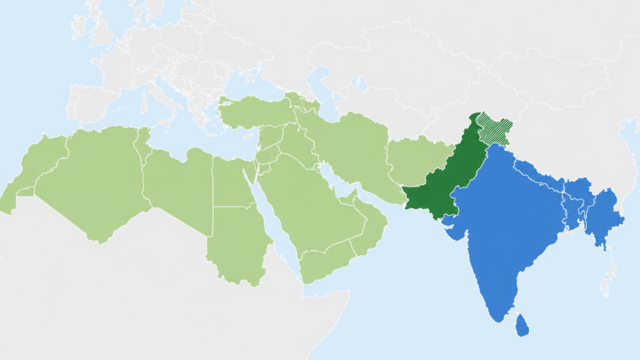
The World Bank has changed Pakistan's status, shifting it from the previous South Asia grouping to the new MENAAP (Middle East, North Africa, Afghanistan, Pakistan) grouping. The administrative reclassification was in effect for both Pakistan and Afghanistan for the fiscal year starting in June 2026. This change primarily reflects Pakistan’s current economic reality. Pakistan's economic system is more closely aligned with the Middle East and North Africa than with the South Asian region, where it was previously compared with India, Sri Lanka, Bangladesh, and other South Asian economies. Several factors that contribute to Pakistan’s reclassification include Pakistan’s heavy reliance on remittances, high demographic pressures leading to labor market strains, and low private sector dynamism.
For the World Bank, the primary reasons for shifting Pakistan were the similarity of several factors with the Middle East and North Africa. Firstly, Pakistan is like the MENA economies, relying heavily on external debt, with a current external debt of 138 billion dollars. Pakistan's external debt-to-GDP ratio is about 33.4%, while the average for the MENA region is about 40%. Secondly, both Pakistan and the MENA region face high demographic pressures. The young age dependency crisis and low job ratios for Pakistan are the same as those in the Middle East. The unemployment rate in fiscal year 2026 for Pakistan stands at 7.1%, reaching 12.5% for youth, while for the MENA region, the average is around 9.2%, and it is around for youth. Thirdly, Pakistan’s labour force participation rate matches the MENA region at 47.7%, while the MENA region is around 45-50%, with female rates at 24.4% and 19%, respectively. These matching economic statistics justify the World Bank's reclassification. By eliminating Pakistan and Afghanistan from the South Asian region, a “survivorship bias” was created. The baseline data for South Asia improved, and the GDP percentage points increased by 0.5 percentage points. This masked vulnerable economies like Nepal and Bangladesh but increased India’s population share to 86% in South Asia.
The World Bank’s 189 members are organized into regions with analytical and operational priorities that align for all the countries in the region. Any reclassification changes how trends are interpreted over time and how regional aggregates are constructed. For Pakistan, this move has both pros and cons for the nation itself and globally as well. Pakistan’s remittances are projected to hit $41.5 billion by the end of fiscal year 2026, the majority of which have been from the Gulf states, about 50-56%, with the majority from Saudi Arabia and the UAE. The Gulf Cooperation Council (GCC) sovereign wealth funds hold $5-$6 trillion in collective assets under management. Being under the MENAAP places Pakistan in a strong position to streamline policy, labor arguments with the Gulf states, and access direct (FDI) via the Special Investment Facilitation Council (SIFC), leading to investments in energy and agriculture in Pakistan by the Middle East. Compared to highly globalized manufacturing programs of the South Asian grouping, the MENA development programs will help empower women and boost digital infrastructure in Pakistan.
Looking at the potential downsides, as South Asia remains one of the fastest-growing EMDE regions with 6.3% growth, whereas the average growth rate in MENA is 1.8%, Pakistan will be structurally grouped with a region of low productivity and 4.5 percentage points lower than South Asia. Tackling the geopolitical crisis of the Middle East, Pakistan will be benchmarked against energy-exporting powerhouses like the UAE and Saudi Arabia, which average non-hydrocarbon expansions and will share a sub-basket with poor, crisis-hit economies like Egypt, Tunisia, and Jordan, making it difficult to achieve favorable competitive pricing on international bonds and credit ratings.
The following table shows a distinct comparison of Pakistan’s economic performance alongside other MENA nations:
|
Country |
GDP Growth Rate (2025-26) |
External Debt (% of GDP) |
Poverty Rate (<$3/day) (2021 PPP Estimate) |
|
Pakistan |
3.5-3.6% (FY26) |
33.4% |
16.5-23% |
|
Afghanistan |
Projected to reach 4% by 2026 |
20% |
52.9% |
|
Saudi Arabia |
4.5% (2025), easing to 3% (2026-28) |
30-35% (gross external debt) |
0.0%, Not tracked (high-income classification) |
|
South Asia (Avg.-ex-Pakistan) |
6.3% Forecast |
23.1% |
3.8% |
|
MENA Region (Avg.) (Excluding Iran) |
Projected at 1.8% |
40% |
8.6-9.4% |
Sources: World Bank Global Economic Prospects (June 2026); World Bank International Debt Statistics; World Bank, "What Happens When Regional Boundaries Change" (2026).
Based on these data, the World Bank's reclassification can be justified, as Pakistan’s data lean closer to the MENA region than to South Asia, despite differences across statistics. This suggests that the reclassification does not translate to a full economic fit but rather a partial trend.

From the 2024 data, we can see from the chart above that adding Pakistan not only brings about a marginal change in the MENA region but also accounts for about one-third of the population of the new MENAAP region, highlighting Pakistan’s significance.
Also read: Is the IMF the Only Reason Behind Pakistan's Rupturing Economy?
In conclusion, the key statistics show that Pakistan is more like the nations of the MENA region than South Asia, though the poverty rate remains higher than the regional average. This reclassification will bring potential upsides and downsides for Pakistan. It will be a new challenge for Pakistan to perform in a new economic framework and to compete against newer benchmarks. Pakistan’s Finance Minister Muhammad Aurangzeb treated this reclassification as a move replacing aid with investment and trade with the Middle East, looking forward to the $40 billion Country Partnership Framework (CPF) agenda from 2026-2035 by the World Bank. Finally, this reclassification does not only represent a familiar grouping for a nation but rather how that nation is analyzed and defined through the lens of the global world.
Disclaimer: The views expressed in this article are solely those of the author and do not necessarily reflect the official stance of The Himalayan Research Institute Pakistan (THRIP)
_________________________________
Taleesan Abdullah is a research intern at PolicyEast, a New York-based think tank mapping geopolitics and global affairs, with a focus on South Asia and the Middle East. He provides insights into global economic issues and their implications for Pakistan, accompanied by relevant policy recommendations. He is currently a third-year BS Economics student at Bahria University, Islamabad.
Contact us

Write with Us
The Himalayan Research Institute is proud to introduce "Himalayan," a dynamic and insightful magazin...
- [email protected]
- +923426470466
- website