
- Opinion Articles
- Labour Rights in Pakistan’s Informal Economy: Issues of Rights, Security and Protection
Labour Rights in Pakistan’s Informal Economy: Issues of Rights, Security and Protection
Tooba Zar
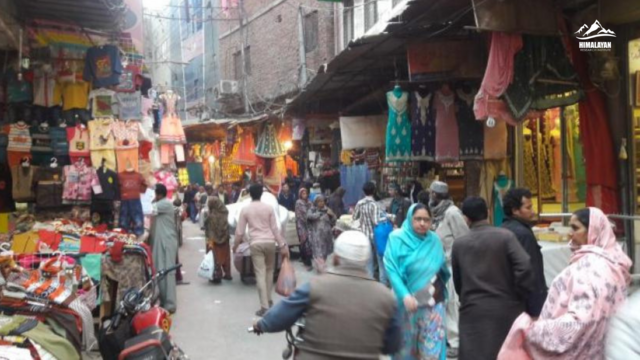
The informal sector employs about 72% of the labour force and lacks formal social protections. It includes domestic workers, daily-wage workers, agricultural labourers, and workers in small, unregistered businesses, and is the backbone of Pakistan's economy. Due to their lack of social security benefits and job security, these workers are primarily not covered by Pakistan's labour laws. Pakistan's GDP for FY25, at current market prices, was Rs 114 trillion, and the estimated share of the informal economy is 59% (approx.). The federal Workers Welfare Fund (WWF) and several provincial Workers Welfare Boards are responsible for providing social protection for workers. Extending comprehensive social protections is difficult in Pakistan because the country's labour market is primarily informal.

It is a fact that attaining sustainable industrial development and guaranteeing social protection for Pakistani workers depend heavily on labor rights and welfare mechanisms. Gaps in implementation, enforcement, and inclusivity persist despite the existence of labour-related policies, regulations, welfare organisations (the Workers' Welfare Fund and Boards), and labour laws under provincial jurisdiction. However, many obstacles impede the implementation of Pakistan's welfare programs and labour-related policies. The effectiveness of current laws, policies, rules, practices, and welfare initiatives must therefore be critically assessed.
Workers are frequently ensnared in debt bondage, a type of contemporary slavery in which they are made to labour in abusive conditions in order to pay back loans obtained from kiln owners. The lack of formal contracts and the ineffective enforcement of labour laws both contribute to this practice.
Key Statistics
|
SECURITY |
PROTECTION |
WAGES |
|
85% Workers lack pension benefits |
72% Report no enforcement of safety laws |
28% Not paid legal minimum wages |
Pakistan's informal economy has its origins in the early post-independence era, when informal activity was required due to poor industrialisation and restricted access to formal financial services. It has flourished because of institutional weakness, lack of enforcement, and political instability. According to the International Labour Organization (ILO) and the Small and Medium Enterprises Development Authority (SMEDA), the informal economy accounts for approximately $457 billion, or nearly 40%, of the nation's GDP. When we examine EOBI, we find that while the system is functional, it has several issues. Workers receive very little, PKR 7,000 or 8,000, after salary deductions while they are working.
Also read: Local Farmers, Orphans!
Home-based workers are chronically and significantly underpaid. On average, home-based workers work 12.3 hours per day, six days a week, and derive a monthly income of PKR 4,342. Their average hourly wage is PKR 41, just 60% of the current statutory minimum wage (PKR 67.50 per hour). According to the Punjab Wage Act, the minimum wages for unskilled adult workers in Punjab Province's industrial and commercial establishments are Rs. 961.53/- per day (for eight working hours) and Rs. 25,000/- per month (for 26 working days).
|
Key issues |
Impact |
|
Workplace Safety |
Given that 2.7% of workers have accidents each year and nearly 1/3 of young people are not pursuing education, employment or training, occupational safety remains a major concern. |
|
Restricted Legal Framework |
The vast majority of laborers lack access to vital social protections because the current legal framework only covers the informal sector and limits benefits to workers in the formal sector. |
|
Insufficient Enforcement of Labor Laws |
Due to corruption, a lack of resources, and societal acceptance of bonded labor, laws pertaining to safety, welfare, and labor rights — such as the Factories Act 1934 and the Industrial Relations Act — are not effectively enforced. |
|
Lack of Awareness and Advocacy |
There is insufficient advocacy to address the underlying causes of bonded labor and promote alternative livelihoods, and workers frequently lack awareness of their legal rights. |
|
Hazardous Working Conditions |
Laborers are subjected to hazardous conditions and dangerous behaviors, which can result in long-term health problems and early mortality. |
|
Non-payment of Minimum Wages |
The legal minimum wage of PKR 25,000 per month was not paid to about 28% of surveyed workers, and 49% of those paid the minimum wage reported working unpaid overtime. |
|
Minimal Pension Participation |
Pakistan has the lowest rate of participation in pension plans worldwide. Active pension plan contributors as a percentage of the labor force stand at 5.4%, significantly below the South Asian average of 13.7%. |
The absence of outreach initiatives for informal labor, especially for women and rural workers, reveals a serious performance gap. Additionally, the fund's governance structure lacks procedures to guarantee accountability and transparency in its operations, despite being inclusive on paper.
Policy Recommendations
The worker constituents, the government, and the ILO are working together to address labour rights issues. The following policy recommendations are based on evidence:
· Social Protection: Increasing benefits, incorporating digital solutions, and broadening coverage.
· Labour Standards: Promoting labor law reforms while assisting in the ratification, implementation and reporting of International labor standards.
· Workplace Safety: Increasing occupational health and safety, especially in high-risk industries. Pakistan joined the UN's Global Accelerator on Jobs and Social Protection for Just Transitions as a pioneer nation in June 2024.
· Skills Development: Strengthening human capital through skill development, providing opportunities for upskilling and assessing and articulating skills for refugees and migrant workers are all examples of skills development
· Home-Based Workers: The government must intensify efforts to set a minimum wage rate for home-based workers in the textile and apparel sector, at least for frequently performed work, and strengthen their ability to bargain for higher wages in order to address the deficiencies in decent work in the informal economy and improve the working conditions of home-based workers.
The International Labour Organization (ILO) created the Decent Work Country Programme (DWCP) for Pakistan (2023–2027), a strategic framework designed to address the nation's labor market issues and advance sustainable development.
Conclusion
The foundation of industrial development is labor, which makes a substantial contribution to Pakistan's economy in a variety of industries, including services, industry, and agriculture. Workers drive industrial productivity while directly benefiting from welfare programs, labor laws, and social safety nets. Due to low unionisation rates, limited knowledge of labour rights, and insufficient representation in the formulation of public policy, workers have little power.
Workers in the informal sector, who make up more than 72% of the workforce, are mainly denied formal protections, further reducing their ability to bargain collectively. Their ability to assert their rights is hampered by informal employment and limited bargaining power, which restricts overall advancement in industrial and social development. However, their influence can become moderate when organised through unions or advocacy platforms.
|
Every labor deserves respect, protection and a voice
|
Disclaimer: The views expressed in this article are solely those of the author and do not necessarily reflect the official stance of The Himalayan Research Institute Pakistan (THRIP)
________________________________
Tooba Zar is a researcher at Re-Thinking Economics, Islamabad, Pakistan. She is an expert in financial reporting and policy research, and is studying MBA Finance at Bahria University, Islamabad.
Contact us

Write with Us
The Himalayan Research Institute is proud to introduce "Himalayan," a dynamic and insightful magazin...
- [email protected]
- +923426470466
- website