
- Opinion Articles
- Gilgit-Baltistan Elections 2026
Gilgit-Baltistan Elections 2026

Wajeeh Ullah
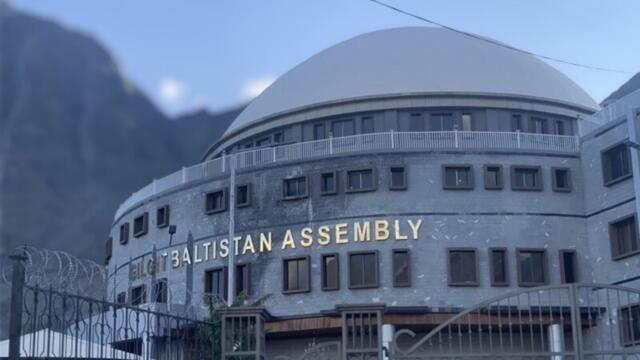
Elections are a key source of democratic governance. They not only reinforce democratic principles in society but also empower citizens to elect leaders who reflect their preferences and address shared concerns. Gilgit-Baltistan is holding its fourth assembly election on 24 January 2026. The mainstream political parties are already developing their manifestos, and local leadership is mobilising the population and shaping the political discourse. Although Gilgit-Baltistan is not fully constitutionally represented in the Federation of Pakistan, it remains under the Gilgit-Baltistan Empowerment and Self-Governance Order of 2009, introduced by the Pakistan People’s Party (PPP) government. The next elections will be conducted under this very legal system.
All major mainstream political parties in the country have, since 2009, been making commitments to provide Gilgit-Baltistan with the long-awaited constitutional status. Nevertheless, very little concrete progress has been made, despite these assurances. Although the demand for constitutional recognition is valid and should be a central topic of political discourse, the upcoming election campaign should not be limited to this issue alone. Other urgent problems, such as long-term energy deficits and the rising number of Glacial Lake Outburst Floods (GLOFs), pose potentially catastrophic risks to the region's social and economic life.
The practice of electoral politics in Gilgit-Baltistan is relatively recent. The 2009 Order introduced an elected legislature, establishing the Gilgit-Baltistan Assembly with 33 members: six women's seats, three technocrat seats, and 24 general seats. The 2009 elections saw the PPP comfortably win. The Pakistan Muslim League (Nawaz) then won a resounding mandate in 2015, which significantly changed local politics. In the 2020 elections, Pakistan Tehreek-e-Insaf (PTI) became the majority party with a two-thirds majority. Political instability re-emerged, however, when the PTI Chief Minister, Khalid Khurshid, was disqualified in 2023, and a coalition government between the PPP and PML-N was formed.
A key question regarding this political course of action is whether mainstream political parties, given their access to greater federal resources and their ability to influence policymaking, will, in their election manifestos, substantially address the governance and development issues that Gilgit-Baltistan urgently requires, rather than relying on empty promises.
The worsening energy crisis is also one of the region's most serious challenges. Power outages during winter are 16-19 hours a day and badly affect the lives of students, shopkeepers, healthcare institutions, and small industries. Electricity demand has grown significantly over the past few years, but generation capacity remains very low, resulting in frequent shortages. Furthermore, reduced water flow and freezing water make small hydropower plants inoperable during winter. The incoming administration should prioritise new and renewable energy technologies, such as alternative power sources and advanced energy storage, to deliver a permanent solution for citizens.
No less threatening is the rise in climate-induced disasters. The most recent series of Glacial Lake Outburst Floods in the summer highlighted the region's high susceptibility to climatic change. Temperatures exceeding 48 degrees Celsius in Chilas promoted glacier melt, destabilised glacial lakes, and caused devastating floods. Homes, agricultural land, and essential infrastructure were swept away, and major routes, including sections of the Karakoram Highway, were repeatedly blocked in Hunza, Ghizer, and Nagar. Hundreds of people were left homeless, livelihoods were ruined, and the vulnerability of disaster-response systems was clearly shown. This underscores the urgency of effective early-warning mechanisms, infrastructure capable of withstanding climate change, and disaster-preparedness plans.
The discussion of provincial status is honest and cannot be omitted; it must also be included in all political parties' manifestos. Nonetheless, addressing constitutional issues should be accompanied by resolving day-to-day governance failures that directly affect people's lives.
In sum, the 2026 elections offer new hope to the people of Gilgit-Baltistan. Political parties should stop using electoral victories as tools of power. They must instead pledge to introduce material changes, particularly in the energy sector, climate resilience, and business governance, to ensure long-term sustainability, stability, and significant development in the region.
Disclaimer: The views expressed in this article are solely those of the author and do not necessarily reflect the official stance of The Himalayan Research Institute Pakistan (THRIP)
_________________________________
Wajeeh Ullah is a student of BS Political Science at Government College University Lahore, Pakistan.
Contact us

Write with Us
The Himalayan Research Institute is proud to introduce "Himalayan," a dynamic and insightful magazin...
- [email protected]
- +923426470466
- website