
- Opinion Articles
- Geopolitics of the Red Sea: How Somali-land Reshaped Regional Alignments
Geopolitics of the Red Sea: How Somali-land Reshaped Regional Alignments

Waqas Abdullah
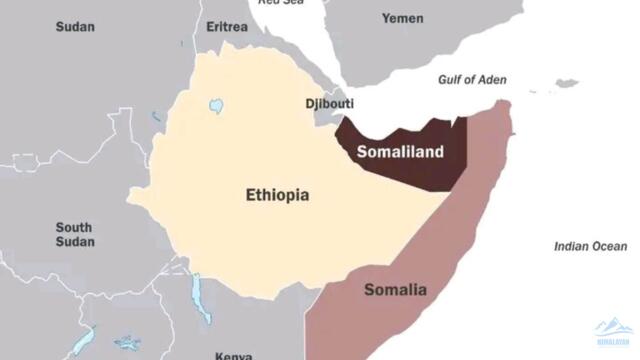
In December 2025, Israel's recognition of Somaliland not only changed Somaliland's official status but also altered the geopolitics of the Horn of Africa and the Red Sea-Indian Ocean region as a whole. Somali-land had operated as a de facto state without international recognition for over 30 years, enjoying relative political stability compared to other parts of Somalia. This long-standing ambiguity became a strategic opportunity for Israel, not just for Hargeisa but for a broader range of regional and extra-regional stakeholders seeking to redefine maritime security and economic pathways. This was not a mere symbolic shift, but a calculated effort to have influence pegged in one of the most sensitive trade areas in the world.
The core of this development is a loose yet coordinating alignment among India, the United Arab Emirates, Ethiopia, and Israel. This alliance demonstrates the mutual desire to control the maritime routes linking Asia, Africa, and Europe. The ability to control and influence the Bab al-Mandab and the Gulf of Aden is immediately converted into economic incentive and depth. Almost all transport between the Mediterranean and the Indian Ocean must travel through these waters and is therefore essential to international supply chains.
Somaliland’s location has disproportionate significance in this framework. Its coastline and the Port of Berbera are potential logistics and security centres to regional and international partners.
In the case of Ethiopia, a landlocked nation with a booming population and economy, access to Berbera will reduce its reliance on Djibouti, where foreign interference and, especially, Chinese influence have grown tremendously. By diversifying its maritime outlets, Addis Ababa has enhanced its bargaining power and minimised its structural vulnerability. In that regard, Somaliland serves as an economic lifeline and a strategic buffer.
This alignment also indicates India's larger goal of becoming a key security provider in the Indian Ocean region. New Delhi has sought to balance Chinese influence without confronting it by invoking maritime principles that emphasise common surveillance, naval cooperation, and regional relationships. The Horn of Africa aligns well with this vision. The interaction with Israel improves India's access to sophisticated surveillance, cyber, and defence technology, and the UAE provides financial and logistical support. All of these components constitute a hybrid model that provides security supply and infrastructure development as an alternative to Chinese-controlled financing and port management deals.

This new structure is a strategic threat to China. The policy Beijing has implemented in the Horn has been based on providing long-term infrastructure loans, port concessions, and its military presence in Djibouti. These tools have enabled China to establish power along key sea routes and incorporate African connectivity points into an extensive Eurasian approach to connectivity. The India-Israel-UAE-Ethiopia axis poses the risk of diffusing this power and is providing host nations with diversified partnerships and increased autonomy. Consequently, China is most likely to retaliate by intensifying diplomatic efforts, investing more in Somalia, and expanding its military presence at its current bases.
The other relevant player that has been influenced by these changes is Turkiye, which has spent a lot of money on the security sector, infrastructure and humanitarian activities in Somalia in the last ten years. Ankara's presence has earned it significant political capital in Mogadishu.
The recognition of Somaliland by Israel makes this stance difficult because it will increase a political and security hub of its rival within the north.
Türkiye, in turn, could step up the military collaboration with Somalia, increase the number of drone and training missions, and activate the pressure on a multilateral level.
Iran fits in this equation, though indirectly. The escalation in the Red Sea has been one of the areas where Tehran has sought to exert influence through asymmetric strategies, such as backing non-state actors and maritime intimidation. An even better synchronised security architecture that focuses on the Somali-land will reduce the area of operation for these activities. In Israeli terms, enhancing maritime surveillance and collaborative naval patrolling in the Gulf of Aden is a wider approach to curb the influence of Iran in other parts of the Levant.
The Gulf monarchies are split in their reaction. Whereas Abu Dhabi has been prolific at investing in Berbera with DP World, considering Somali-land to be a key element of its Red Sea strategy, Saudi Arabia has historically had a more equalised approach to interactions with Mogadishu, as well as regional competitors. An even greater Emirati gov with Israel and India would drive Riyadh to reconsider its stance, particularly when it feels that its dominant position in the Islamic and Arab worlds is being threatened.
In Somaliland, Egypt has a vested interest in the country's development, coupled with many years of issues related to Nile water security and Ethiopia's emergence. The Grand Ethiopian Renaissance Dam war has already caused a souring of relations between Cairo-Addis Ababa. Greater collaboration between Israel, India, and Ethiopia strengthens Egyptian anxieties of strategic leverage. As such, Egypt has enhanced its relationship with Somalia and promoted legal efforts focused on territorial integrity, hoping that Somaliland would not gain further recognition. The African Union's position remains a significant impediment to Somaliland's full diplomatic recognition. The AU's current support for inherited colonial borders reflects fears that acknowledging secessionists would lead to the continent's disintegration. In this light, Somaliland is perceived less as a success story of self-rule and more as a dangerous example. India and its allies should thus deploy significant diplomatic resources to convince African countries that Somaliland is an exception, not the rule.
On the economic front, the association seeks to bring Somaliland on board the new trade routes between South Asia, the Middle East and Europe.
This, if successful, would help increase the supply chain's resilience and minimise reliance on Chinese-controlled ports. Nevertheless, these aspirations are structural, including limited local capacity, governance challenges, and the danger of over-militarisation. The security footprints created may discourage private investment and make people more inclined to view Somaliland as a geopolitical outpost rather than a business centre. Ethiopian internal stability is also needed to ensure the sustainability of this framework. The domestic environment in Addis Ababa is influenced by ethnic tensions, political reforms, and the post-conflict reconstruction process. Any significant degradation would interfere with the Berbera route and destabilise the entire route. In the same vein, Somaliland's political unity is not a sure thing. The image of the Reliable Partner may be damaged by conflicts over elections, clan balances, and resource allocation unless they are managed properly.
In a wider sense, the move by Israel to recognize Somali-land is an aspect of pragmatic and interest-oriented diplomacy in Africa and the Red Sea. Instead of relying on conventional alliances, Tel Aviv is building dynamic relationships in security, technology, and supply chains. This enables it to exert influence well beyond its immediate neighbourhood. As an independent great power with its own great-power ambitions, India finds a multiplier in this model. The UAE leverages capital and ports to generate commercial and strategic returns. Out of necessity, Ethiopia has access to markets and friends.
China, Egypt, and Turkiye are the actors most exposed to the impacts of this realignment for various reasons.
China is losing its infrastructure leverage and is vulnerable to strategic containment of key maritime routes. Egypt is facing the threat of diminished influence over the Horn and increased Ethiopian bargaining power at the Nile bargaining. Turkiye will be marginalised in Somalia and will not have returns on its long-term investments. Of these, China is arguably the most challenged by the long-term challenge that the emerging axis is directly focused on the principles of its regional policy.
To sum it up, Israeli recognition of Somaliland has hastened the emergence of new geopolitics in the Horn of Africa, centred on maritime security, technological integration, and corridor politics.
Though such alignment ensures a more stable position and diversified alliances, there are risks of polarisation, militarisation, and diplomatic backlash. This will be determined by how well regional sensitivities are managed, economic development is embraced, and competing powers are accommodated rather than locked out. It will be recognition that either fortifies or widens the region's lack of unity, but the responsibility with which this new power is wielded will tell the story.
Disclaimer: The views expressed in this article are solely those of the author and do not necessarily reflect the official stance of The Himalayan Research Institute Pakistan (THRIP)
_________________________________
Waqas Abdullah is a geopolitical analyst and anthropologist with expertise in Middle Eastern and Indo-Pacific politics. A Türkiye Bursları Scholar, he is pursuing a Master’s in International Relations at Selçuk University, Konya, Türkiye. Director of Foreign Affairs at DAG Media Network. His work focuses on climate refugees, human security, and regional cooperation.
Contact us

Write with Us
The Himalayan Research Institute is proud to introduce "Himalayan," a dynamic and insightful magazin...
- [email protected]
- +923426470466
- website