
- Opinion Articles
- Climate Change Deepens Daily Struggles in Gilgit-Baltistan
Climate Change Deepens Daily Struggles in Gilgit-Baltistan

Wajeeh Ullah
“Climate change is the defining issue of our time, and we are at a defining moment.”
(António Guterres)
The high mountains of Gilgit-Baltistan do not discuss climate change in abstract scientific terms. It is experienced in broken fields, dwindling glaciers, unpredictable snowfall, and flash floods that wipe out houses. For communities residing in the Karakoram and Himalayas, climate change has become the norm.
One of the most endangered mountain ecosystems in the world is found in Gilgit-Baltistan.
According to scientists, mountain areas are highly sensitive to even minimal increases in temperature. The area's biodiversity, including rare plants, alpine forests, snow leopards, ibex, and migratory birds, relies on stable climatic conditions. Nonetheless, studies of mountain biodiversity in Gilgit-Baltistan indicate that rising temperatures and changing precipitation patterns are disrupting this fragile balance. Its mountains have a high diversity of wild plants and animals, some of which are endangered, but they are more exposed to warming trends.
According to temperature gauge readings from meteorological stations in Gilgit, Skardu, Gupis, and Bunji, average temperatures have been steadily increasing over the past few decades.
Changing seasonal rhythms include warmer nights, shorter winters, and increased rainfall rather than snowfall. Snow that previously accumulated slowly and melted slowly in the spring to nourish streams and irrigation systems is melting sooner or less frequently. Such a change has a direct impact on agriculture, water supply, and ecosystems.
These transformations are very personal to farmers in Hunza, Ghizer, and Skardu. Gilgit-Baltistan Agriculture is mostly subsistence-based. Families develop small terraced plots but mostly rely on glacial meltwater for irrigation. Water flows are unpredictable when the glaciers melt too fast. Glacial lakes, rather than providing a constant supply, may burst, leading to flash floods that destroy crops and infrastructure. Fields and irrigation systems have been damaged in parts due to erosion and sudden river flooding.
Another livelihood source under pressure is livestock herding. Alpine pastures are sensitive to changes in temperature and precipitation. It has been found that even small changes in climatic conditions can alter vegetation cover and reduce grass abundance. Reduced grass availability will lead to weaker livestock, lower dairy yields, and reduced income for families who rely on livestock.
The effects are not limited to the agricultural sector. Mountain biodiversity is under considerable pressure.
Scientific research indicates that rising temperatures lead to the expansion of vegetation zones at the expense of lower altitudes. Some species can move to elevated areas in search of favourable conditions, whereas others have nowhere to go. The species already present on the mountain tops are at risk of habitat loss and extinction. Stiff mountainous areas limit the possibility of migration, rendering one vulnerable.
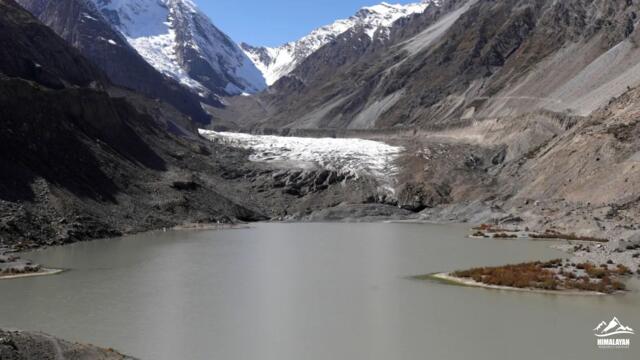
Another sign of alarm is the accelerated melting of glaciers. With increasing altitude, environmental changes are becoming more evident, with glaciers as the primary features of high-altitude areas. Glaciers also regulate ecological stability and provide freshwater. Their withdrawal affects wetlands, aquatic life, and wildlife migration. Hydrological cycles are becoming more variable, and wetlands, which are reservoirs of biodiversity and natural buffers, are shrinking.

These changes have been observed by local communities well before formal scientific reports brought them to attention. The elders in Gilgit-Baltistan recall a time when there was more snow and seasonal patterns were predictable. Some bird species that were once commonly observed are now seldom encountered. Fields that previously sustained healthy livestock are becoming scarce. The data are supported by communities’ lived experiences: climate change is already altering life in the mountains.
The knowledge gap is another problem of concern. Nevertheless, environmental change is evident; however, studies examining the effects of climate change on biodiversity in Gilgit-Baltistan remain few. The issues that require immediate research include the impacts on aquatic life, economically valuable plant species, the migration of large mammals such as snow leopards, and the stability of high-altitude ecosystems. Policymaking and adaptation strategies can never be complete without exhaustive research.
It is projected that climate change in Pakistan will intensify over the next few decades, and Gilgit-Baltistan will experience a pronounced rise in temperatures. Increasing heat waves, altered rainfall patterns, and glacier instability endanger biodiversity and human welfare.
Since Pakistan is highly dependent on agriculture and on water systems supplied by glaciers, the stakes are high.
Nevertheless, the story of Gilgit-Baltistan is not only vulnerable but also one of resilience. Communities are changing by enhancing irrigation systems, engaging in conservation programs, and adopting ecosystem-based adaptation. Government agencies and organisations are striving to address research gaps and to develop climate models that better predict future effects. Conservation is geared towards safeguarding wildlife habitats and ensuring the sustainable management of natural resources.
Yet adaptation has limits. Mountain communities rely on biodiversity to survive. Once the ecosystems are weakened, livelihoods are weakened. Climate change is exerting additional stress on already fragile natural resources. Forest overexploitation, misuse of pastureland, and habitat fragmentation also contribute to vulnerability.
The future of Gilgit-Baltistan is based on scientific research and policy decisions. Government agencies, non-governmental organisations, and academic research organisations need to collaborate to bridge knowledge gaps and implement sustainable resource management strategies. Maintaining mountain biodiversity is not only an environmental objective but also a survival tool for people, a means of maintaining water stability, and a driver of food security.
Climate change, as Antonio Guterres puts it, is indeed the issue of our time. That defining moment is already coming in Gilgit-Baltistan. The melting ice caps, the changing seasons, and the farmers who are struggling tell a clear story. When one delays meaningful action, the expenses become irreversible. However, through research, responsible management, and community resilience, there is still hope that these marvellous mountains will continue to support biodiversity and human life in future generations.
Disclaimer: The views expressed in this article are solely those of the author and do not necessarily reflect the official stance of The Himalayan Research Institute Pakistan (THRIP)
_________________________________
Wajeeh Ullah is a BS Political Science student at Government College University Lahore, Pakistan.
Contact us

Write with Us
The Himalayan Research Institute is proud to introduce "Himalayan," a dynamic and insightful magazin...
- [email protected]
- +923426470466
- website