
- Opinion Articles
- Climate Change and Youth in Pakistan: The Intergenerational Cost of Inaction
Climate Change and Youth in Pakistan: The Intergenerational Cost of Inaction
Dr Kanwal Rubab
For young people in Pakistan, climate change increasingly threatens the opportunities available as they enter adulthood. Floods, heatwaves, and other disruptions shape how they grow up, study, and prepare for work, yet their lasting effects receive less attention than immediate economic and physical damage. Climate change poses risks in countries where households already face poverty, insecure livelihoods, and unequal access to essential services. With few resources to recover from climate shocks, families may pass lasting consequences to the next generation. Climate inaction is therefore more than an environmental or economic concern: it can deepen inequality and shift costs to young people who had little say in the decisions behind it.
Beyond Environmental Damage: Pakistan's experience with recent floods shows how climate disasters disrupt essential services vital to children's development. In September 2024, UNICEF reported that 230,000 students in flood-affected Sindh were affected by school closures. More than 1,300 schools were damaged, including 228 that were destroyed. These disruptions interrupted learning, particularly in communities with limited educational opportunities. Restoring access to education required more than reopening classrooms; it also depended on repairing damaged facilities and restoring essential services. Climate-related income losses from floods, droughts, or extreme heat force families to balance basic needs with schooling, healthcare, and other expenses. Some young people delay education, take on more household duties, or enter work early. These effects vary by household resources and public support but influence young people's futures.
These disruptions hinder young people's transition from education to work. Interrupted schooling and prolonged financial strain make it harder to gain the qualifications and skills needed for decent jobs. In a country where productive employment opportunities are already limited, climate-related disruptions add another constraint to young people's transition into working life. Though disaster damage is immediate, its effects on education, skills, and economic prospects last long after the emergency.
The Unequal Burden of Climate Change: Climate change affects young people in Pakistan unequally. Household income, assets, location, and access to public services determine disaster resilience and recovery. Low-income families are especially vulnerable, with fewer resources to absorb losses or sustain essential spending during disruptions. For poor households, losing farmland, livestock, or other productive assets to floods creates lasting hardship. Families may borrow, sell remaining assets, or cut education and healthcare spending. Better-off households can manage these disruptions more easily, giving young people facing similar climate hazards unequal prospects based on their families' finances.
Gender and geography shape these experiences. In rural, agriculture-dependent communities, climate losses threaten household income and young people's livelihoods. Young women may face additional barriers related to mobility, continuing education, and entering paid employment. Differences across communities show why national averages alone cannot capture climate change's effects. Repeated climate disruptions deepen inequality. Young people from households with few assets and limited public services may reach adulthood with fewer opportunities for education, skill development, and stable work. If recovery efforts ignore these unequal starting points, climate shocks can reinforce disadvantage across generations—an important dimension of intergenerational inequality discussed in my recent report.
The Cost of Policy Inaction: Pakistan has taken key steps toward a climate policy framework. The updated National Climate Change Policy 2021 was approved in 2021, followed by the Federal Cabinet's approval of the National Adaptation Plan in July 2023. These policies lay the groundwork for climate resilience, but the challenge is turning commitments into practical protection for communities whose livelihoods and essential services face climate risks. For young people, climate policy should protect the conditions they need to develop. Rebuilding infrastructure and providing emergency aid are vital, but may not restore lost education, income, or job opportunities. Without addressing these needs, families remain vulnerable to future climate shocks.
In another report, I argue that disaster response must go beyond immediate relief to restore household economic security and prevent further impoverishment. The same applies to youth development. Climate resilience depends on children's education, young people's job prospects, and household stability during and after disasters. Climate adaptation, education, employment, and social protection policies need closer coordination. Schools in climate-exposed areas need plans to sustain learning during emergencies and help students catch up afterward. Households reliant on climate-sensitive livelihoods need accessible disaster support. At the same time, young people need opportunities to develop skills for climate-resilient livelihoods and emerging employment opportunities in a changing economy. Climate inaction means more than failing to reduce environmental risks: it includes poor preparation for foreseeable disruptions, inadequate recovery support, and neglect of unequal climate losses. Without planning that addresses these institutional and developmental issues, those least able to cope will continue to bear the greatest costs of inadequate preparedness and delayed recovery.
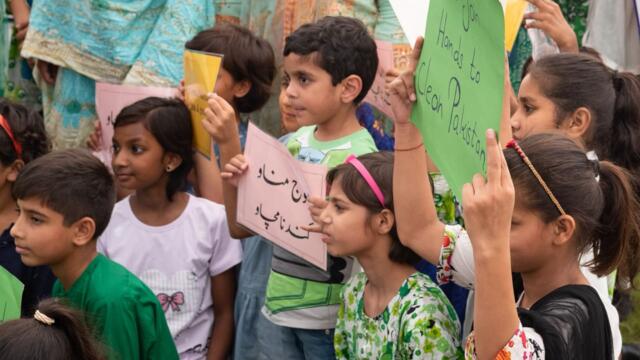
From Awareness to Institutional Participation: In Pakistan, young people are often urged to support environmental protection through tree planting, recycling, and awareness campaigns. These activities foster responsibility and community engagement, but climate action must extend beyond individual and community efforts. Young people also need a voice in decisions shaping local responses to climate risks, especially adaptation plans for water, public services, education, and resilience. They can share local knowledge, identify service gaps, assess whether initiatives meet community needs, and strengthen accountability by raising concerns and monitoring public commitments.
Access to these opportunities is unequal: young people in rural, low-income, and climate-exposed communities face financial, geographic, and institutional barriers to engaging with policymakers. As a result, those most affected by climate disruption remain underrepresented in policy decisions. Government institutions and local authorities should create regular, accessible ways for youth to participate in climate planning and monitoring. Youth representatives and community organizations should help set local adaptation priorities, receive responses to recommendations, and evaluate initiatives. These measures would replace symbolic consultation with a meaningful role for youth in climate governance.
Protecting the Future: Pakistan's climate response will shape its environmental and economic future, as well as opportunities for young people facing rising risks. For disadvantaged youth, weak preparedness and unequal recovery worsen disaster impacts. Meeting this challenge means linking climate adaptation with human development: keeping education accessible during emergencies, ensuring vulnerable households receive recovery support and social protection, and giving young people a meaningful role in resilience decisions. This requires sustained investment, coordination, and accountability.
The costs of climate inaction are not inevitable. Timely preparation and fair recovery can prevent disruptions from becoming lasting disadvantages. Policymakers must look beyond immediate disaster damage to the opportunities lost when households lack support. Young people in Pakistan should not inherit today's inadequate preparedness as a limit on their futures. Protecting their opportunities is both an environmental responsibility and a fundamental development obligation to the next generation.
Disclaimer: The views expressed in this article are solely those of the author and do not necessarily reflect the official stance of The Himalayan Research Institute Pakistan (THRIP)
_________________________________
Dr Kanwal Rubab is a Development Policy Analyst, with research interests in development studies, public policy, sustainable development, climate governance, and social justice. Her work focuses on emerging policy challenges at the intersection of technology, governance, human development, and inclusive development.