
- Opinion Articles
- China's Soft Power and its Rise on the World Stage
China's Soft Power and its Rise on the World Stage
Dur e Adan
In international relations, soft power is the ability to co-opt rather than coerce, in contrast with hard power. It entails using attractiveness and appeal to influence other people's preferences. Soft power, which uses foreign policy, political ideals, and culture to effect change, is non-coercive. Joseph Nye of Harvard University clarified in 2012 that "the best propaganda is not propaganda" when it comes to soft power, adding that "credibility is the scarcest resource" in the information age. All parties involved in international politics, including non-governmental organizations and international institutions, are capable of using soft power. Some scholars also view it as an illustration of the "second face of power," which deceptively enables people to achieve their desired goals.
According to the Elcano Global Presence Report 2018, China ranked second out of 20 countries, and its influence ranking (2nd) was significantly higher than its reputation ranking (24th). China has grown into a world power that affects international cooperation, the economy, and security. The Communist Party of China (CPC) – the most significant political institution in China - aspires to a new international order in which liberal principles like democracy and free speech, led by the West, do not dictate the international political system; rather, a mixed model can replace them.
Following China’s rise in the first quarter of the 21st century, the international community is divided - there are those who welcome China's rise, and then there are those who find it discomforting. Those who welcome China's rise, applaud its economic model, viewing it as a role model that should be emulated; they also applaud the arrival of a new international actor with a strong desire to promote multipolarity and diffuse power. Furthermore, they seek to take advantage of China's offer of win-win collaborations through institutions like NDB, AIIB, and One Belt, One Road (OBOR), receiving much-needed funding to address their expanding infrastructure development demands without having to undertake difficult and extensive political changes. China's no-strings-attached, no-conditionalities policy is praised, particularly by authoritarian regimes that are essentially cut off from access to international aid and financing. However, some contend that this policy deters these states from pursuing necessary reforms to increase accountability, transparency, and respect for human rights.
Also read: Will China’s Rising Economy Make it a Hegemon?
Maoist diplomacy refers to the foreign policy strategies and principles that were espoused and practiced by countries influenced by Mao Zedong’s ideology, particularly during the mid-20th century. Maoist diplomacy refers to solidarity with countries and movements and fighting against imperialism and colonialism. This began as a strategy to weaken Western power and its global dominance and expand the influence of the global movement. "The culture in places where it is attractive to others, its political values when it lives up to them at home and abroad, and its foreign policies when others see them as legitimate and having moral authority" are the three resources Nye claims underpin a nation's soft power.
China’s transition to soft power is broad, and it is steadily increasing its support for cultural exchange by sending doctors and teachers abroad, welcoming students to study in China, and funding Chinese language programs abroad.
According to Eric Teo Chu Cheow of the Singapore Institute of International Affairs, "Chinese culture, cuisine, calligraphy, cinema, curios, art, acupuncture, herbal medicine, and fashion fads have all emerged in regional culture" in Southeast Asia. Even if those trends may have started in Hong Kong or Taiwan, young people in the region are enthralled with Chinese culture as portrayed in movies, pop music, and television. A large share of the more than 110,000 international students from almost 170 countries who studied in China in 2004 came from Southeast Asia.
By comparison to the bad spell that Latin America has had with the United States, China’s kind of a breath of fresh air. Securing resources, like oil, soybeans, and steel, and persuading the several Central and Latin American countries who recognize Taiwan to switch sides are China's two key goals in the area. In Latin America, China and Taiwan are engaged in a strategic rivalry. Leaders in Latin America are likewise pleased to look to Beijing as a substitute for Washington. During his 2004 visit, Chinese President Hu Jintao conveyed the ideal kind of involvement that Latin America had been waiting for from Washington: stronger economic, financial, trade, and technological links. Over the past several years, the Chinese government has invested more than $50 billion in Latin American countries through the negotiation of more than 400 trade and investment agreements. However, even politicians from Brazil to Paraguay could be promoting commerce with Beijing.
Also read: China’s Belt and Road Initiative and its implications for South Asian States
China has aggressively pushed a development agenda in Africa while also securing deals in commodities and energy. China's soft-power engagement in Africa includes forgiving more than $1 billion in debt owed by African nations and declaring its support for Africa in international forums on trade and human rights. Major investments in energy, infrastructure, and agriculture have been made, along with sending over 900 physicians to serve throughout Africa and training over 100,000 Africans in Chinese military and academic institutions. Human rights organizations have criticized China for allegedly arming authoritarian governments and supporting dictators in Sudan, Angola, and Equatorial Guinea, among other places where China has made significant energy investments. China has responded to these criticisms by constructing roads, hospitals, and bridges in these nations.
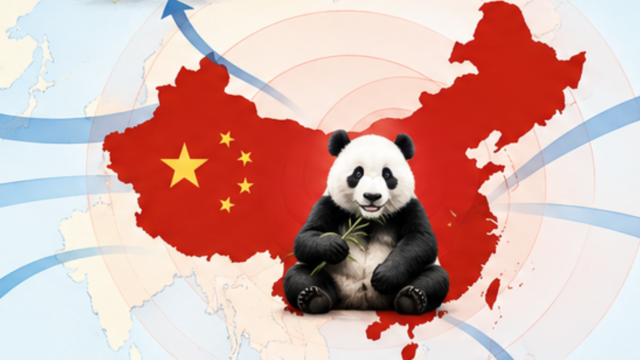
The practice of China giving Giant pandas as gifts to other nations as a kind of diplomacy is known as panda diplomacy. In China, giant pandas are revered as national treasures and seen as messengers of kindness and harmony. Giving pandas as gifts to other nations is regarded as a kind gesture and a means of enhancing diplomatic relations. Panda diplomacy has its origins in the Tang Dynasty (7th–10th century), when Chinese monarchs gave pandas as gifts to their neighbours. However, the 20th century saw a rise in the popularity of contemporary panda diplomacy. All things considered, China's panda diplomacy, which combines cultural diplomacy with environmental conservation objectives, has proven to be a distinctive and useful instrument in its foreign policy approach. It still contributes to global goodwill and to China's soft power.
We cannot neglect the importance of China increasing its soft power to become a global hegemon and compete with the economic giant, the US. All the factors described above highlight the importance of China’s soft power, along with its hard power strategies, in competing with the US, the global soft power giant.
Disclaimer: The views expressed in this article are solely those of the author and do not necessarily reflect the official stance of The Himalayan Research Institute Pakistan (THRIP)
_________________________________
Dur-e-Adan is a research intern at Himalayan Research Institute. She holds a BS (Hons) in International Relations from Government College University (GCU) Lahore, Pakistan. Her research focuses on International Political Economy, with a specialized emphasis on clean energy transitions and green hydrogen infrastructure.
Contact us

Write with Us
The Himalayan Research Institute is proud to introduce "Himalayan," a dynamic and insightful magazin...
- [email protected]
- +923426470466
- website