
- Opinion Articles
- Around 2/3 of Lahore’s population is experiencing health Issues due to Smog
Around 2/3 of Lahore’s population is experiencing health Issues due to Smog
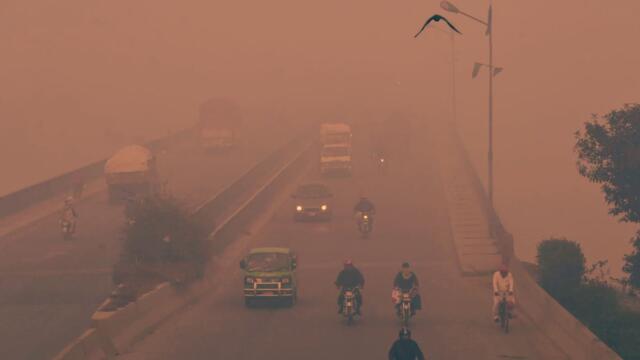
A survey was conducted by the Himalayan Research Institute, in collaboration with Climate Forward Pakistan, to understand public perceptions of the growing smog problem in Punjab, particularly in major urban centres such as Lahore. The survey aimed to examine the environmental, health, and policy-related dimensions of smog and to identify public opinions on its causes and possible solutions. A total of 150 respondents participated in this survey, providing valuable insights into the severity of the smog crisis and the effectiveness of current mitigation measures.
Key Findings
§ 100% of respondents agreed that smog has become a serious environmental problem in Punjab, indicating a universal concern about air pollution.
§ Around 80% of participants reported experiencing health problems themselves or among their family members due to smog, highlighting its direct impact on public health.
§ Public opinion on government policies was divided: approximately 50% believed current measures were effective, while others expressed doubts or dissatisfaction.
§ A large majority (about 90%) of respondents reported following precautionary measures during smog season, such as wearing masks and reducing outdoor activities.
§ Most respondents (around 80%) believed that smog is not limited to Lahore but affects the entire province of Punjab, underscoring the issue’s regional nature.
§ The major underlying cause of smog is traffic congestion and industrial emissions.
§ Other contributing factors identified by respondents include urbanisation, population growth, and deforestation, each accounting for approximately 30–40% of responses.
§ The most commonly suggested solution (45–50%) was urban tree-planting initiatives to improve long-term air quality.
§ Additional recommended measures included the use of smog-control technologies (smog guns), the implementation of alternate-day traffic systems, and stricter regulation of new housing developments.

The findings indicate a strong consensus among respondents regarding the seriousness of the smog problem. All respondents (100%) agreed that smog has become a major environmental issue in Punjab. The result reflects the increasing frequency and intensity of smog episodes in recent years, particularly during winter, which have significantly affected daily life, visibility, and air quality across the province. In terms of health impacts, the survey revealed that approximately 80% of respondents reported experiencing health problems due to smog, or that their family members did. These health issues commonly include respiratory illnesses, eye irritation, coughing, throat infections, and breathing difficulties.
The survey results regarding government policies and regulations showed mixed opinions among respondents.
About 50% of participants believed that government measures to control smog are effective, while the remaining respondents expressed uncertainty or dissatisfaction with existing policies. This divided perception indicates that although some initiatives, such as temporary school closures, traffic restrictions, and emission control measures, have been implemented, many citizens still believe that stronger and more consistent enforcement is required to achieve meaningful improvements in air quality. Another important finding concerns public behaviour during smog season. The majority of respondents, approximately 90%, reported following precautionary measures such as wearing masks, limiting outdoor activities, and monitoring air quality updates. This high level of compliance suggests growing public awareness about the health risks associated with smog and the importance of personal protective actions.
When asked about the major causes of smog, the largest proportion of respondents (approximately 50–60%) identified traffic congestion and industrial emissions as the primary contributors. Other causes mentioned included rapid urbanisation, population growth, and deforestation, each accounting for roughly 30–40% of responses.
Finally, respondents suggested several potential solutions to address the smog crisis. The most frequently recommended measure (about 45–50%) was urban plantation and tree-planting initiatives, reflecting public belief in environmental restoration as a long-term strategy. Additional solutions included the use of smog-control technologies (smog guns), the implementation of alternate-day traffic systems, and stricter regulation of new housing developments.
Overall, smog is widely recognized as a severe environmental and health issue in Punjab. The results highlight the urgent need for comprehensive policies, stronger environmental regulations, public awareness campaigns, and sustainable urban planning to effectively reduce air pollution and protect public health in the region.
Wanna download the complete report?
All rights reserved with Himalayan Research Institute
________________________________
Contributors

Waqas Abdullah: Team Lead, Capacity Building and Training, Climate Forward Pakistan

Sanwal Hussain Kharl: Managing Director, Himalayan Research Institute