
- Opinion Articles
- Afghanistan, Five Years Later: The Chain Collapse Triggered by the Denial of Education
Afghanistan, Five Years Later: The Chain Collapse Triggered by the Denial of Education
Giorgia Pietropaoli
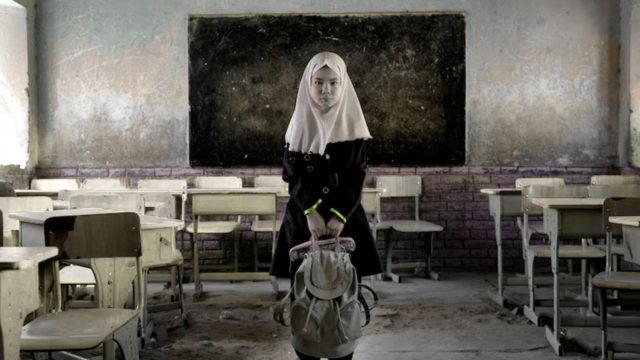
On August 15, 2021, the entry of the Taliban into Kabul—unfolding in the silence of gunfire but amid the general chaos of the departure of the last American contingent—marked the beginning of a structural ordeal, rapidly transforming into one of the most severe humanitarian and civil emergencies in contemporary history. Today, five years later, international attention has largely faded, leaving Afghanistan isolated in the darkness of a theocratic regime. Yet behind the silence of the media, a systematic tragedy is unfolding: denying half the population access to education is not merely the violation of a fundamental civil right, but a calculated act of demolition that erases the future of an entire nation. Shutting school desks for girls does not simply mean confining women to the domestic sphere; it means triggering a chain collapse that impacts the health, economy, culture, and very survival of Afghan society.
A Multi-Level Chain Collapse
The deprivation of education imposed on Afghan girls and women does not represent an isolated harm, but rather the first link in a chain reaction that is dismantling the structural foundations of the country across multiple interconnected levels.
The Sociological Shockwave
At its core, the systematic exclusion of girls from education represents a devastating sociological regression. Education is the primary engine of social mobility, civic participation, and intergenerational progress. When a society bars females from learning, it dismantles the foundational architects of its own social fabric. Educated women are statistically proven to lower infant mortality, delay child marriage, foster civic engagement, and instil a baseline of critical thinking within the household. By cutting off girls from schooling, the regime is not only erasing individual futures; it is actively engineering a passive, isolated, and disempowered citizenry, systematically dissolving the social capital required for any future community rebuilding or democratic transition.
Also read: Being a Woman in South Asia: A Battle on Every Front
The Collapse of Healthcare
The first and most direct institutional blow is registered in the healthcare system. The ban on attending universities and, most recently, medical institutes is creating an irreversible generational void, destined to leave the population without care. In a highly conservative country where it is impossible for women to be examined by male doctors, the absence of new generations of female physicians, midwives, and nurses translates into a silent death sentence. Many women avoid medical treatment, or die from childbirth-related complications, precisely because of the inability to access female healthcare personnel—a factor that is exacerbating an already high maternal and infant mortality rate among the highest in the world.
Economic Paralysis
Added to this is the economic paralysis, inextricably linked to the education ban. With the female employment rate having fallen well below the 7% threshold, the national economy is deprived of qualified human capital. Formal statistics paradoxically record an increase in business licenses registered to women, rising above the 10,000 mark; however, this figure does not tell a story of development, but rather of extreme emergency. These are mostly home-based micro-enterprises—such as makeshift tailoring workshops—born not out of choice or emancipation, but as a desperate attempt at subsistence by women dismissed or expelled from public offices. These activities operate under conditions of extreme vulnerability, devoid of access to bank credit, choked by the energy crisis, and blocked by rigid mobility restrictions, including the mandatory presence of a male chaperone.
Cultural Erosion and Generational Regression
The picture of devastation is completed by a profound cultural impoverishment and a generational leap backwards. With 2.4 million girls currently excluded from secondary education—a figure that risks reaching four million by 2030 according to UNESCO estimates—Afghanistan is losing its capacity to regenerate through knowledge. The regression in literacy is staggering: over 90% of ten-year-old children cannot read a simple text, while the national literacy rate has plummeted to 37%. This data heavily mortgages the tomorrow of the entire nation, not just its female citizens barred from classrooms. Concurrently, the devastating impact of early and forced marriages—utilized by impoverished families as the sole avenue for economic relief—ultimately shatters the paths of growth and autonomy for very young girls, closing the circle of a self-sustaining system.
The Resilience of Afghan Women
Despite the suffocating grip of the regime, the response of Afghan women is not passive submission, but an extraordinary and desperate form of resilience. This strength manifests itself first and foremost in the dignity of female entrepreneurs and workers: behind the sterile facade of commercial licenses lies the fierce determination of those who refuse to be erased. Although deprived of capital and forced to operate within domestic walls, these women transform the necessity of survival into a stronghold of autonomy and dignity, opposing a fragment of the economy that resists total annihilation.
Alongside this, resistance is fueled in the hidden places of knowledge. From invisible schools and educational micro-communities set up in private homes—such as in Herat—to extreme strategies devised by female students, who go so far as to deliberately fail exams just to prolong their stay at school, the civil population demonstrates unwavering tenacity in defending the non-negotiable value of knowledge. These are minimal gestures, almost invisible on a national scale, but together they compose a mosaic of daily resistance capable of keeping the flame of female education alive against all odds.
Also read: The Changing Role of Women in Traditional Societies
Cracks in the Regime
Faced with this bottom-up push, the political-institutional framework remains deadlocked in an internal tug-of-war. The hardline stance on education and rights is indeed not monolithic: on one side stands the hardline wing of Kandahar, led by supreme leader Hibatullah Akhundzada, who views gender apartheid as a non-negotiable identity dogma; on the other operate more pragmatic factions, often tied to the Haqqani network, who see greater flexibility on human rights as a diplomatic lever to unfreeze international funds and aid.
So far, however, the intransigent faction continues to prevail, condemning Afghanistan to a political dead end and structural isolation on the international stage. It is a fragile internal balance, yet one that has hitherto left no room for real concessions: any opening hinted at by the pragmatic faction has been systematically rejected or downplayed, a sign of how control over women's bodies and knowledge has become, rather than a contingent policy, the ideological pillar upon which the regime's very legitimacy rests in the eyes of its most radical base.
Conclusion: A Hope That Endures
Five years after the fall of Kabul, Afghanistan finds itself imprisoned in a self-reinforcing mechanism: denying education to women weakens healthcare, which weakens society, which in turn makes an ideological reversal even harder to imagine. This chain collapse risks consolidating generation after generation, while international attention wanes and diplomatic channels remain blocked.
Nevertheless, the daily resistance of Afghan women—their entrepreneurial survival networks, clandestine learning circuits, and students willing to fail just to stay in school—proves that the regime's attempt to erase half the population has not yet managed to completely extinguish the hope for future redemption. It is within this minimal space, contested daily between prohibition and resistance, that the destiny of an entire generation of Afghan girls—and with it that of the entire country—is being played out today.
Disclaimer: The views expressed in this article are solely those of the author and do not necessarily reflect the official stance of The Himalayan Research Institute Pakistan (THRIP)
_________________________________
Giorgia Pietropaoli is from Rome, Italy, and teaches classical literature. She studied Classical Philology at Sapienza University of Rome, where she later earned a Master’s degree in Political Science. She is a writer and investigative reporter for Focus On Africa Magazine and also collaborates with the New Delhi Post.
She is actively involved in journalism, education, and activism, and she also specialises in Middle Eastern dynamics, with a particular focus on Iran and Afghanistan, and maintains a strong commitment to human rights. She's a member of the Board of Directors of WORDS Organisation, Women Organisation for Rights, Dignity and Speech.
She is the author of the essay Afghanistan. Dove tutto cambia per non cambiare mai (Afghanistan: Where everything changes, yet nothing ever changes), published by Infinito Ed. Additionally, she translated from Persian and edited the Italian editions of Parole dall'esilio (Words from Exile) by Somaia Ramish and Sinfonia di pace (Symphony of Peace), both published by All-around Ed.
Contact us

Write with Us
The Himalayan Research Institute is proud to introduce "Himalayan," a dynamic and insightful magazin...
- [email protected]
- +923426470466
- website