
- Opinion Articles
- A Blue Passport for Former Politicians, But What About the Future of Pakistan’s Youth?
A Blue Passport for Former Politicians, But What About the Future of Pakistan’s Youth?
 Qura Tul Ain
When privilege survives retirement, but talent struggles to survive the system, we must question our priorities.
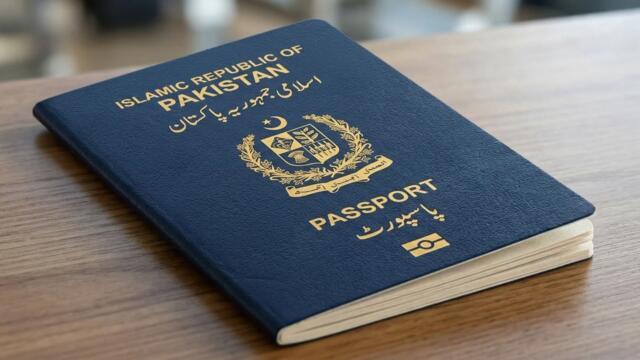
Pakistan is once again having a conversation about privileges, but perhaps we are asking the wrong questions. The Senate has passed an amendment to the Passports Act, 1974, proposing that former parliamentarians should be allowed to retain their official blue passports even if they have not completed their full parliamentary terms. The justification presented is parity with other high-ranking officials. But is parity the only standard by which legislation should be judged? What about public interest, institutional accountability and the priorities of a country struggling to provide opportunities for its younger generation?
A blue passport is an official travel document, not a lifetime reward for occupying public office. Public office is a constitutional responsibility entrusted to individuals by the people. It should not become a gateway to permanent privileges after leaving office. The concern becomes even more serious when we consider Pakistan’s broader governance challenges.The question is not whether former parliamentarians deserve respect. The question is whether public privileges should continue without corresponding public responsibility.
Pakistan is a country where young graduates spend years pursuing degrees, preparing for competitive examinations and applying for scholarships, internships and employment opportunities. Many talented individuals struggle to secure even a fair chance. Meanwhile, legislative attention appears to be occupied with extending privileges to those who have already held positions of authority. What message does this send to the next generation?
Consider the tragic case of Laiba Ijaz, a young gold-medalist graduate of the International Islamic University Islamabad. She aspired to pursue higher education abroad. According to allegations under investigation, she was deceived through fraudulent promises of foreign admission and visa arrangements. Her death has raised deeply disturbing questions about education-related fraud, institutional vigilance, the protection of vulnerable students and the effectiveness of our accountability mechanisms. (Dawn's coverage of the case) Laiba’s story should not merely become another headline that disappears after public outrage fades. It should force us to examine the system in which a young person’s educational aspirations can become an opportunity for exploitation. And this is where the contrast becomes difficult to ignore.
We are debating how former politicians can retain privileged travel documents, while young Pakistanis are struggling to obtain legitimate opportunities to study, work and build their futures.Instead of creating more privileges for those who have already exercised power, why are we not creating more opportunities for those who are waiting to contribute to the country? Why are we not strengthening scholarship verification mechanisms, regulating education and immigration consultants, improving access to merit-based opportunities, ensuring transparent recruitment and establishing effective accountability for those who exploit young people?
There is another institutional concern that cannot be ignored: corruption and accountability. When allegations of corruption, financial misconduct or abuse of authority arise, citizens expect transparent investigations, fair trials and consequences under the law. They should never have reason to believe that political status, connections or official privileges can become a convenient route away from scrutiny. A passport should never become a symbol of immunity, and retirement from public office should never mean retirement from accountability.
The government must also consider the international consequences of excessive official passport issuance. Reports indicate that Pakistan has already faced concerns from foreign countries regarding the number of official passports in circulation. The Interior Minister has acknowledged that the number of blue passports has been reduced and that further restrictions are being considered. These concerns deserve serious parliamentary scrutiny. (Dawn's report on the reduction in blue passports) The argument of equal treatment among public officials cannot replace the more fundamental test of public necessity. If a privilege is extended, Parliament must explain why it serves the public interest, what safeguards prevent misuse and why it deserves priority over pressing public needs.
Pakistan does not lack talented young people. It lacks sufficient transparent pathways through which talent can flourish. We need a system that rewards merit rather than proximity to power, creates opportunities rather than permanent privileges, and delivers accountability rather than selective protection. The real legacy of a parliament should not be the number of privileges its members secure for themselves after leaving office. It should be the institutions they strengthen, the opportunities they create and the lives they improve. Perhaps it is time for our legislators to ask themselves a much more important question:
If our young generation cannot find opportunities in its own country, what exactly are we preserving through these privileges? Pakistan needs leaders who make it easier for the next generation to build a future here, not a system that makes privilege easier to retain than opportunity is to obtain. Public office is a responsibility, not a lifetime entitlement. And the future of Pakistan must matter more than the privileges of its former power holders.
Disclaimer: The views expressed in this article are solely those of the author and do not necessarily reflect the official stance of The Himalayan Research Institute Pakistan (THRIP)
_________________________________
Qurat-ul-Ain is an Advocate of the High Court with an interest in legal affairs.