
- Blogs
- Redefining Relations: The Geopolitical Impact of Saudi Travel Liberalisation
Redefining Relations: The Geopolitical Impact of Saudi Travel Liberalisation
Waqas Abdullah
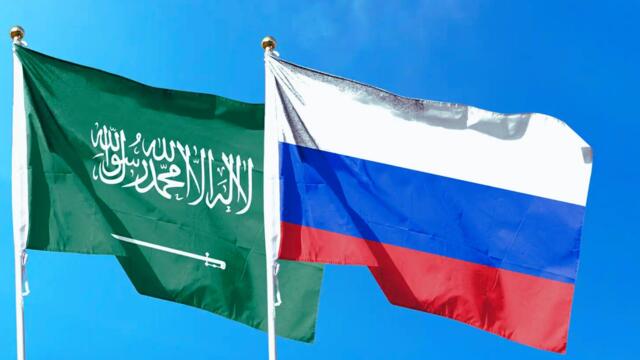
The mutual visa exemption agreement between Saudi Arabia and Russia marks a significant turning point in their diplomatic evolution, signalling not just an administrative change but a structural shift in Eurasian geopolitics. Signed on 1 December 2025 in Riyadh during the Saudi–Russian Investment and Business Forum, the arrangement allows citizens of both nations holding diplomatic, special, or regular passports to enter without a visa for up to 90 days per year. What elevates its significance is the fact that Russia has become the first country ever granted such a privilege by the Kingdom for holders of ordinary passports. This distinction underscores the depth of trust both countries are now willing to extend. This decision comes at a time when Saudi Arabia's Vision 2030 continues to push the Kingdom toward diversified alliances, greater openness to global tourism, and new economic partnerships, while Russia is recalibrating its foreign relations amid shifting global power dynamics and long-term sanctions imposed by Western countries.
Before the signing of this agreement, Saudi Arabia and Russia already shared a robust partnership in energy, primarily through OPEC+ coordination, which helped stabilise global oil markets during periods of significant volatility. However, the new visa rules push the relationship from sector-specific cooperation to broad-based societal engagement. Tourism numbers already suggested momentum: in the years leading up to 2025, approximately 80,000–100,000 Russian tourists were visiting Saudi Arabia annually despite the bureaucratic challenges of visa processing. With these barriers removed, tourism experts predict the figure may rise to more than 200,000 by 2027, primarily as destinations such as AlUla, NEOM, the Red Sea projects, Riyadh Season, and the growing entertainment sector attract global attention. For Saudi Arabia, this advancement directly strengthens its travel and hospitality economy, one of the core engines of Vision 2030’s diversification plan. It also helps the country reduce its reliance on traditional tourist sources from Europe and South Asia, making its tourism base more global and stable.
For Russia, the agreement carries equally meaningful economic weight. Saudi Arabia has been increasingly investing abroad in strategic sectors such as agriculture, mining, green energy, advanced technology, and petrochemical expansion. Russia, with its vast natural resources, industrial capabilities, and evolving regulatory frameworks, presents an ideal arena for Saudi investors. Future Saudi investments in Russian agriculture could secure long-term food security, a focus the Kingdom has pursued for years. Likewise, Russian companies will gain easier access to Saudi Arabia’s megaprojects, especially those requiring heavy industry, construction technology, drilling expertise, and manufacturing. By removing visa requirements, Moscow gains a critical opening into the Gulf’s most powerful economy at a time when maintaining international commercial mobility is essential for countering sanctions-related economic pressures.
The geopolitical ripple effects of this agreement extend far beyond Saudi Arabia and Russia themselves. Third countries, especially those with strategic interests in the Middle East or Eurasia, are likely to interpret this development as an indicator of shifting alliances in an increasingly multipolar world. China, which already partners with both Saudi Arabia and Russia through BRICS, the Shanghai Cooperation Organisation structures, and significant energy investments, stands to benefit from the strengthening of Saudi-Russia ties. Closer mobility and collaboration between Riyadh and Moscow complement the Chinese objective of expanding non-Western economic corridors and reducing dependence on Western financial and travel networks. This change subtly supports the rise of a more interconnected Eurasian system.
Western nations, particularly the United States and major European powers, may view this agreement through a more cautious lens. For decades, the Middle East has been an arena where Western diplomatic and military influence shaped alliances and travel systems. Saudi Arabia’s granting of a privileged status to Russia at a time when Russia’s relations with the West are strained signals Riyadh’s growing foreign policy autonomy. The Kingdom is making it clear that it will determine its partnerships based on strategic interest rather than historical alignment. This autonomy reflects a broader pattern Saudi Arabia has maintained balanced relations with the U.S., China, India, Türkiye, and now Russia, positioning itself as a global middle power capable of independent manoeuvring. While Western nations may not directly oppose the agreement, they will undoubtedly reassess the evolving landscape of Gulf diplomacy.
Central Asian nations, Kazakhstan, Uzbekistan, and Kyrgyzstan, will benefit indirectly as improved Saudi-Russia mobility boosts travel routes through their territories, expanding flights, logistics corridors, and tourism exchanges. Even in African countries, particularly those where Saudi Arabia and Russia both maintain security or investment footprints, new joint ventures are emerging in mining, food security, and infrastructure.
The strategic benefits to Saudi Arabia are layered and long-term. By granting visa-free access to Russia, Riyadh strengthens its image as an emerging global hub where East meets West. The agreement supports the Kingdom’s aviation strategy, with Riyadh Air and Saudi expected to open more direct routes to Russian cities, increasing traffic through Saudi airports and advancing the goal of turning Riyadh into a top global transit centre. It also lays a foundation for cultural exchanges, universities, arts organisations, sports federations, and technology hubs to collaborate more easily. As Saudi Arabia pushes toward becoming a centre of global events, including EXPO 2030 and major sports tournaments, smoother mobility with Russia will ensure greater participation and a more diverse international crowd.
Russia, for its part, gains a much-needed diplomatic victory at a moment when maintaining international relevance is crucial. Access to Saudi Arabia’s rapidly expanding markets gives Russian companies new revenue channels. In contrast, Russian tourists who have historically travelled heavily to Turkey, the UAE, and Egypt now have an additional Gulf destination open without restrictions. This strengthens Russia’s tourism diplomacy and supports its airline and hotel industries. Furthermore, the agreement helps Moscow cement its presence in the Middle East, a region where it has invested heavily in geopolitical influence through Syria, energy coordination, and security consultations.
Beyond economics and diplomacy, the psychological and symbolic dimensions of this agreement are powerful. It tells the world that Saudi Arabia and Russia intend to build a partnership rooted not only in state-to-state negotiations but also in people-to-people contact. It normalises interaction at multiple layers: business leaders, students visiting for short academic programs, cultural delegations, artists, engineers, energy specialists, and ordinary families visiting friends. Such mobility deepens familiarity and reduces political friction, contributing to a more stable bilateral relationship.
In essence, the Saudi-Russia visa exemption is not a conventional travel reform but a strategic signal that adds a new layer of complexity to the geopolitics of Eurasia and the Gulf. It enhances Saudi Arabia’s role as a global facilitator of movement, expands Russia’s international avenues, encourages multipolar connectivity, and quietly reshapes the diplomatic calculus of countries watching from the outside. While seemingly simple, the agreement lays the foundation for decades of economic cooperation, tourism growth, cultural exchange, and geopolitical leverage. Its consequences will unfold gradually, but they are poised to influence regional dynamics far more deeply than ordinary observers might assume.
Disclaimer: The views expressed in this article are solely those of the author and do not necessarily reflect the official stance of The Himalayan Research Institute Pakistan - (THRIP)
_________________________________

Waqas Abdullah is a geopolitical analyst and anthropologist with expertise in Middle Eastern and Indo-Pacific politics. A Türkiye Bursları Scholar, he is pursuing a Master’s in International Relations at Selçuk University, Konya, Türkiye. His work focuses on climate refugees, human security, and regional cooperation.
Contact us

Write with Us
The Himalayan Research Institute is proud to introduce "Himalayan," a dynamic and insightful magazin...
- [email protected]
- +923426470466
- website