
- Opinion Articles
- Multidimensional social exclusion faced by Transgender Community in Pakistan
Multidimensional social exclusion faced by Transgender Community in Pakistan
Zaib Yaqoob Minhas
Transgender is a broad concept that relates to individuals whose gender expression differs from the sex assigned to them at birth. The term transgender is used to describe anyone whose gender expression or identity does not conform to socially established norms. It encompasses a range of genders, identities, and sexual orientations that challenge the traditional gender system. In Pakistani society, only two genders are recognised: female and male, and transgender individuals are not generally acknowledged within this framework. Such individuals are often referred to by various terms, such as Hijra, Khawajaseera, and Khusra.
Back in old times?
During pre-colonial times, especially in the Mughal era, transgender individuals held essential and respected roles in society. They often worked in royal courts, serving as guards, harem advisors, and caretakers. The Mughal emperors appreciated their loyalty and regarded them as honest and trustworthy people capable of handling sensitive tasks. The dignity and respect associated with Khawaja Sira were vital to society.
The state of Pakistan was formed in 1947, following the partition, and thus, the newly established nation inherited the colonial legal system that still marginalised the transgender population. Nevertheless, this did not stop the community from preserving and surviving its cultural practices. Transgenders were also reduced to the conventional roles of dancing, begging and performing at ceremonies to get a living. In Pakistan, the fight for legal recognition and rights of transgender members of society gained strength at the start of the 21st century. The most notable fact was that in 2009, transgender people were recognised as the third legal gender of the community. This decision marked a significant milestone in the recognition of the rights and lives of the transgender community.
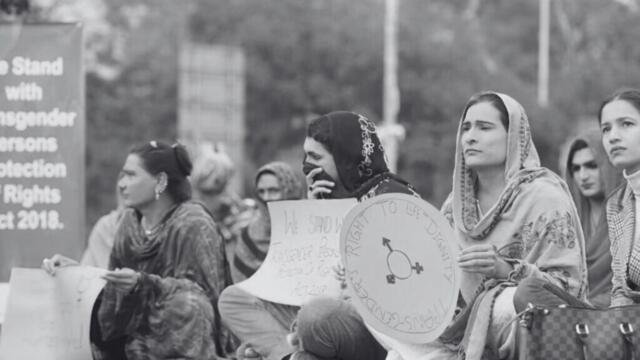
Pakistan enacted the Transgender Persons (Protection of Rights) Act in 2018, formally recognising the right to self-identify their gender and to have it recognised in official documents. The law also addressed discrimination in education, health, and employment. Activists viewed this act as a historic milestone, and it signalled a significant shift in the attitude and treatment of the transgender community in the country. In Pakistan, like in the rest of the world, attitudes towards the transgender community are highly discriminatory and prejudiced. Although the legal situation has improved in recent years, transgender individuals in Pakistan still face many challenges across different spheres of life. Some parents even disown their transgender children. Parents may accept a deaf, blind, mute, a rapist, or a murderer, but not a transgender child. It is believed that the transgender community should be restricted to children born with a sexual abnormality.
Multidimensional Social Exclusion:
Violence against transgender people and social exclusion are escalating. Incidents of violence such as murders, harassment, and rape have been reported repeatedly since 2018, yet law enforcement rarely punishes the perpetrators. The violence is not solely physical but also psychological, as most transgender individuals face threats and verbal abuse almost daily.
· Family abandonment
The saddest fact to be faced by transgender people in Pakistan is that the struggle starts at home. Families tend to perceive the transgender identity as a shame that endangers their honour and social stature in society. Transgender individuals become victims of direct rejection upon revealing their identity and are forced to leave their families’ houses. Transgenders often have no home and no one to support them in life, as parents usually disown their children instead of confronting society. Such desertion has a domino effect of vulnerability. Transgenders are deprived of the right to inheritance, claim property and family enterprises without the support of the family. In most cases, they find themselves in collective shelters with other disadvantaged people, or they join hijra groups to survive.
· Religious misinterpretation
As a marginalised group within the Pakistani population, there is also the issue of transgender individuals practising their religion. Most of the transgender community are Muslim, but many are not permitted to enter mosques or conduct their religious practices there. The communities shunned them and barred them from attending religious festivals (Islam, 2020). They only prayed on certain occasions. Although it was alleged that they were not viewed as Muslims by others, their religious involvement was limited. This tendency towards discrimination and social exclusion damages their self-confidence and leaves them feeling depressed and sad (AAWAZ, 2016).
· Public Harassment and Verbal Abuse Incidents
Transgender individuals make public environments their battlegrounds as they are continuously verbally assaulted, mocked, and intimidated. Street harassment includes inappropriate comments and sexual propositions, up to the case of threats and physical intimidation. Streets, transportation centres and markets are turned into hostile places where transgender people have to be constantly on guard against verbal assaults. The harassment usually contains the terms of derision, sexual insults and humiliation in the presence of the crowd to humiliate and dehumanise. Certain crowds of individuals have a habit of assembling to ridicule the transgender members of society, and they see them as entertainment, as opposed to human beings who should be respected. Such a spectacle on the part of the media strengthens the negative stereotypes and makes discriminatory actions acceptable to society.
The daily experience of hostility causes chronic stress. It compels most transgender individuals to reduce their public exposure or travel only at certain times when they may experience less severe levels of harassment.
· Employment Protection Gaps
The Transgender Persons Act is an anti-discrimination law that has been effective in the workplace, though enforcement has been largely ineffective. The majority of transgender persons are employed in the informal sectors, such as begging, sex work, or entertainment, where the labour laws offer little protection.
Even with the law that protects transgender people, they are often denied a job opportunity in the case of private sector employers who cite cultural issues or the choice of customers. Transgender job quotas in government jobs are on paper, but in an actual sense, the quotas can hardly be translated into employment opportunities because of the discriminatory hiring systems. The professional licensing agencies, such as medicine, law, and engineering, also do not provide clear directives on transgender practitioners, which causes more obstacles to formal employment.
When transgender students experience discrimination in schools and universities, the educational needs to fulfil many occupations cannot be achieved, which leads to a loop of economic marginalisation that legal approaches cannot successfully eliminate.
· Educational Barriers
Education is a key avenue to economic empowerment, and most transgender people are deprived of this chance. Stereotypes and abuse in schools, bullying, and not being accepted drive many to school dropouts at an early age. Despite attempts to open educational facilities for transgender people, including the Gender Guardian School in Lahore and many others of the same scale, these attempts are immature and do not reach a broad audience. Lack of proper education means that transgender individuals are unable to undergo technical training programs and higher education that would enable them to be employed in better-paying positions. Vocational training centres usually reject transgender candidates due to their allegations that the facilities are not suitable and because they do not want to expose other students to awkward situations.
· Legal Systems Obstacles to Healthcare
Although the 2018 Act has ensured access to healthcare, transgender people face systematic obstacles within healthcare institutions. Tertiary hospitals lack trained personnel to address transgender-specific health needs, and many healthcare professionals exhibit discrimination rooted in religious or cultural prejudices. The legal system does not explicitly address hormone replacement therapy, gender-affirming surgeries, or psychological support for transgender patients. Due to insufficient medical infrastructure, most transgender individuals rely on informal networks or self-medication, which can be dangerous. Another significant gap is insurance coverage - health insurance providers do not cover treatments related to transgender health, and government healthcare services do not offer specific provisions. The shortage of transgender-competent medical professionals means that a visit to healthcare facilities often becomes a traumatic experience for many.
What is the way forward?
· Living in Pakistan, transgender individuals face a range of interconnected issues that impact all areas of their lives. The challenges run deep within Pakistani society, from inadequate legal protections to social rejection. Economic opportunities are scarce, leaving many in precarious situations. The healthcare system often denies them help when they need it most. Many find education an unachievable goal and safe housing a daily struggle.
· To break these barriers, it is necessary to act on several levels. Societies should also break the negative stereotypes and provide a platform in which transgender people can live with dignity.
· Government institutions need to tighten legal systems and make them effective. There should be adequate training of healthcare providers, and employers should open their doors to qualified transgender employees regardless of their gender orientation.
· The actual change occurs when an average human being chooses to defend their transgender neighbours, friends, and family members. It is not a smooth road, but each little step toward acceptance and inclusion will improve a person’s life.
Disclaimer: The views expressed in this article are solely those of the author and do not necessarily reflect the official stance of The Himalayan Research Institute Pakistan - (THRIP)
_________________________________

Zaib Yaqoob Minhas is a researcher and a final-year Public Administration student at Riphah International University, Pakistan. Her research focuses on human rights violations, social issues, global affairs, and governance, with practical experience in policy research, policy analysis and academic writing.
Contact us

Write with Us
The Himalayan Research Institute is proud to introduce "Himalayan," a dynamic and insightful magazin...
- [email protected]
- +923426470466
- website