
- Opinion Articles
- Is “Simultaneity Trap” the Strategic logic of CRINK?
Is “Simultaneity Trap” the Strategic logic of CRINK?
Umra Akbar
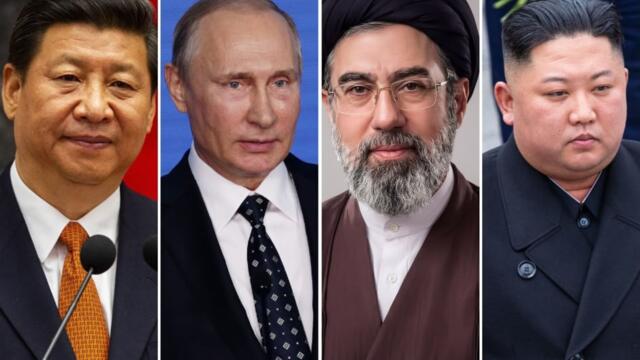
A considerable paradigm shift has been seen in the current geopolitics, as indicated by the emergence of blocs seeking to oppose the existing global system of unipolarity. One of these blocs is CRINK (China, Russia, Iran, North Korea), often termed the “Axis of Upheaval”. It refers to an emerging structure of coordination within the realms of diplomacy, military strategy, technology, and economics among the said countries. However, the concept can also create some confusion. CRINK is not a NATO-like alliance nor does it represent an ideological bloc.
No doubt, all these countries have different political realms, national goals and economic structures, but they all have one common and shared interest: to undermine Western strategic primacy and construct a multipolar order by diffusing the existing global powers. This informal alliance is a coping mechanism to counter the Western sphere of influence (NATO and EU).
The ambiguous nature of CRINK itself is its main advantage. Since it is not a formal alliance, the participating states have an opportunity to cooperate without being responsible for the actions of each other automatically. One state can provide diplomatic support, the other technological assistance, and the third can distract the West with something else. Such cooperation is much more discreet than that in the framework of a treaty alliance, but at the same time, it makes deterrence harder.
There is no official organization of the CRINK states but a crew of the wounded states, hurt by Western imperialism and hegemonic activities. The common wounds of these states let them join against the West generally and the US particularly to challenge their global democratic norms, governance and status. The seed of hatred against the West is deeply rooted back in the historical rivalries also.
In the case of China, the Opium Wars, unequal treaties, foreign concessions in Chinese port cities, and Japan's invasion are still like a stab in the heart of Chinese people, and the grudges are continuously being injected into the next generation by teaching them all these cruelties as the formative national trauma.
The central tenet of Russia's narrative is that verbal promises made in 1990 suggested NATO would not move eastward, a claim that Western governments contest. The disillusionment of Russia after the 1990s economic collapse, the 1999 Kosovo bombing, and the fear of neighbouring states joining NATO have reinforced Russia to be a part of CRINK, to cope with the dismay, economic disruption, and strategic insecurity over the buffer zone.
For Iran, the fundamental grievance is the 1953 coup, in which the CIA and British intelligence assisted in the removal of elected Prime Minister Mohammad Mosaddegh after he nationalised Iranian oil. Tehran cites the 1979 Revolution, the hostage crisis, U.S. assistance for Iraq during the 1980–88 war, the 2002 “Axis of Evil” designation, the 2018 U.S. exit from the JCPOA, the 2020 assassination of Qassem Soleimani, and the Shah's Western-backed rule as a single, ongoing pattern of antagonism.
The aftermath of the Korean War (1950–1953), which left the Korean Peninsula divided along ideological lines, had a significant impact on North Korean politics. In actuality, the rise of CRINK is one aspect of a larger trend in international relations, that rising states are contesting the hegemony of traditional hegemonic structures.
Fields of cooperation among the CRINK
Arms transfer has been a crucial field for cooperation between CRINK member countries, and the arms transfers often become connected with regional conflicts and hostilities.
Before 2022, the bulk of weapons exports came from Russia to the rest of the three countries. Russia has been a significant player in the international arms market, seconded by the USA over the past few decades. According to the Stockholm International Peace Research Institute (SIPRI), between 1980 and 2021, Russia accounted for about 78 percent of the total Chinese imports, 73 percent of North Korea's and 40 percent of Iran's arms imports. However, both Iran and North Korea have become less dependent on arms supplies from Russia and elsewhere throughout the 2010s, while Chinese imports from Russia have dwindled considerably since the early 2000s.
The trend where weapons were being transferred from Russia to other CRINK states got altered post-2022 because Russia became more reliant on the weapons being supplied by Iran and North Korea for maintaining its military operations in Ukraine. Even though much of such cooperation is done bilaterally by certain dyads on the axis, its advantages increasingly accrue to the entire group. For example, the Russian progress in battlefields and knowledge of modern war gained from Ukraine is spreading across all nations on the axis.
Strategic implications of this alignment
The best explanation for CRINK does not assume an integration of the four into a united alliance but the strength of such states is to create concurrent pressure. According to the United States National Defense Strategy of 2026, there is “a simultaneity problem” as a result of which there could be various types of pressure from several theaters at the same time, forcing the country to concentrate on the Indo-Pacific region while depending on other partners. In this case, CRINK works against the United States in terms of concurrency, diversion, and overload of decisions.
Through its coercive actions, Russia has made the Ukraine crisis into a strategic clash, albeit indirect, between the United States and Russia. The Russian invasion has forced the United States to provide significant assistance to Ukraine, strengthen NATO, impose sanctions, and manage the threat of escalation without using American forces directly against Russia.
China is challenging the U.S. capabilities indirectly via intimidation and coercion instead of defeating America directly. China is using coast guard ships, maritime militia, water cannons, dangerous manoeuvres, patrolling, ramming's, shadowing operations and “law enforcement” that does not exceed the limits of armed warfare in the South China Sea. It forces the United States to carry out freedom of navigation exercises, assure its allies like the Philippines, AUKUS and QUAD to maintain its reputation, and keep naval and intelligence capacities in the region. China uses the strategy wisely since each time it tests how far it can go without America interpreting its behavior as an armed assault or below the threshold.
During the ongoing confrontation between the US and Iran, by attacking United States bases and its partners in the region, Iran threatens the passage of ships through the Strait of Hormuz, arms militants, and maintains pressure using missiles and drones, forcing the United States to divert military and other resources to deal with this issue, which includes naval forces, air defence, intelligence and even diplomacy. This diversion takes resources from the Indo-Pacific region and forces the United States to respond politically.
The North Korean nuclear arsenal, ballistic-missile tests, cyber activities, threats to South Korea and Japan, as well as growing military ties with Russia, require that the U.S. continue to station about 28,500 U.S. soldiers in South Korea, continued extended nuclear deterrence, missile defence, surveillance, and joint drills. Even in the absence of any ongoing war, the threat from Pyongyang forces the U.S. to invest large amounts of resources in Korea.
Simultaneity Trap
With China becoming increasingly aggressive in the South China Sea, Russia remaining a revisionist state, Iran continuing to retaliate, and North Korea continuing to enhance its nuclear weapons program, all of which are happening simultaneously, is a challenge that poses a Strategic Overload to the US. This is how these states have diverted the focus of the US and fragmented the capabilities of Washington. All these states pursuing separate objectives at different fronts, drawing Western attention concurrently, this is what we call Simultaneity Trap or in Western language Malign Alignment.
Every one of the CRINK actors operates based on its own interests in its own theater of operations, but their cumulative effect creates a strategic environment for which Western organizations have not been designed. The problem snowballs beyond the theaters themselves. An attack by missiles in Northeast Asia, a confrontation at sea in the South China Sea, an assault by drones in the Middle East, an invasion in Ukraine, and a viral campaign in shaping perception of all of these incidents may seem separate, but they are products of the same strategic concurrency.
CRINK is more than the capacities of each of the four countries individually. The consequence of this is strategic overload, in which different crises fight for limited attention and the understanding of the crises is determined before any institution has time to react.
Disclaimer: The views expressed in this article are solely those of the author and do not necessarily reflect the official stance of The Himalayan Research Institute Pakistan (THRIP)
_________________________________
Umra Akbar is a research intern at Himalayan Research Institute. She is pursuing her BS in International Relations from Government College University Lahore.